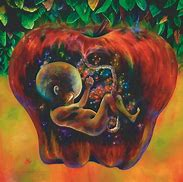
Comfort and joy, Where can I find this comfort and joy? Take a break.Step away and find a quiet place.
Comfort and joy, Where can I find this comfort and joy? Sit for a while. Ask for God’s presence.
Comfort and joy, Where can I find this comfort and joy? Be still. Close your eyes. Breathe. Relax.
Comfort and joy, Where can I find this comfort and joy? In the depths of your soul, reach as far down as you can.
Comfort and joy, Where can I find this comfort and joy? Sit for a while. Be open to God’s presence.
Comfort and joy, Where can I find this comfort and joy? Ask God to sit next to you and join you in your thoughts.
Comfort and joy, Where can I find this comfort and joy? Shh. Quiet. Hear God speak.
God says, Hello, precious child. “I knit you together in your mother’s womb.” (Psalm 139:9) I am so happy to see you. I’ve been waiting for you to ask me to sit with you. Go ahead and tell me what is on your mind.
It’s okay. Speak your mind. Stay awhile in this sacred place.
Comfort and joy, Where can I find this comfort and joy? In this sacred space, may you find comfort and joy.
Whatever your religious beliefs are or are not, may this season of holidays, encourage you and bring you tidings of comfort and joy.
HAPPY HOLIDAYS!
*****
Inspired by the Christmas Song, God Rest Ye Merry Gentlemen… “Fear not,” then said the Angel, “let nothing you affright, This day is born a Saviour, Of pure Virgin bright, To free all those who trust in Him, From Satan’s power and might.” O tidings of comfort and joy, Comfort and joy, O tidings of comfort and joy.
MERRY CHRISTMAS!
#Comfort #Joy #Christmas #SacredSpace
If you enjoyed this, please Share, Like, and Follow. Thanks so much for your support and encouragement!
The other day, I had a conversation with a long-time friend. She told me she had been looking to purchase a manger for her Christmas Nativity Set. The salespeople she asked didn’t know what a manger was, let alone how it fit into Christmas!
As I write this post, even Grammarly doesn’t recognize the word manger! How sad is that?
A manger is a place to feed animals. Quite an unlikely place for Jesus to be born. Or was it?
A manger. It is not pretty. Under the shelter of a roof, a piece of wood lies in a barn or stable. It may or may not have raised legs and is filled with hay or slop. In the wintertime, back in the day, it was common for people to bunk in with their animals to stay safe and warm, like a giant slumber party with your furry friends.
manger
ˈmān-jər
NOUN a trough (see trough sense 1a) or open box in a stable designed to hold feed or fodder for livestock.
Merriam Webster Dictionary
A Baby in a Manger
Can you imagine a baby in a manger?
It would be utterly appalling to some to see a newborn in an unsterilized, dirty, filthy trough used to feed animals. Yet, some might see this scene as a sign of great awe and wonder.
Think about this.
The God of the Universe chose a stable filled with animal creatures to welcome his Son. This was the ultimate sacrifice and message of love and humility. God sent his Son for…
Every. Single. Person. On. This. Planet. Rich. Or. Poor.
Scripture isn’t clear whether animals were or were not present at the birth of Christ. Let’s imagine for a moment that they were. What would it have been like for the animals witnessing the birth of Jesus? Sure, they had seen cows, horses, and pigs give birth, but a human? How divine! Just like God saved the animals from dying in the Great Flood, God blessed the animals as witnesses of this most sacred event.
The Miracle of the Manger
The true meaning of Christmas may have evaporated from some of the fabric of our society. Yet, some of us know, this “living water,” was a miracle.
The most perfect baby in the world was born in a lowly manger. Jesus, born in a manger. The same Jesus who fed 5,000. The same Jesus who feeds our soul. This Jesus, was born in a manger made with the purpose of feeding animals, can feed you, too!
His name was, is, and will be forever, Jesus.
Away in a Manger
Away in a manger, no crib for a bed, The little Lord Jesus laid down his sweet head.
The stars in the sky looked down where he lay, The little Lord Jesus asleep in the hay.
The cattle are lowing, the baby awakes, But little Lord Jesus no crying he makes.
I love Thee, Lord Jesus, look down from the sky And stay by my cradle til morning is nigh.
Be near me, Lord Jesus, I ask Thee to stay Close by me forever, and love me, I pray.
Bless all the dear children in thy tender care, And take us to heaven, to live with Thee there.
There is no doubt in anyone’s mind about the emotional roller coaster of pregnancy. It’s something experienced by all who are in close contact with a woman “with child.” From the crazy food cravings to the emotional outbursts, there is never a dull moment.
Mary & Son, Jesus Elizabeth & Son, John (The Baptist)
Mary and Elizabeth were first-time mothers-to-be and surely had emotions stirring inside of them. Both were destined to give birth. Both had partners at their side.
At her advanced age, Elizabeth probably laughed, yet felt blessed to be able to conceive and finally bear a child. She looked forward to blending in with the other women in the neighborhood. She would no longer be stared at for being childless. Awe. Astonished. Honored. Blessed. Privileged. Matronly. Relief.
Mary did not laugh, yet most likely felt blessed and privileged to be chosen by God to deliver the baby Jesus. Even being the Holy Mother, she undoubtedly felt the scorn of some in society as an unwed pregnant girl. What shame she must have felt and her family, too. Throw that all in with a mix of hormones running wild, and one can sense the good with the bad. Awe. Astonishment. Honored. Blessed. Anointed. Miraculous. Unbelief. Lowly. Scared. Disappointed. Bewildered. Humbled. Sacred.
Unique Story
Like Elizabeth, I was older when I gave birth to my younger son. It was redemptive to me, a moment filled with joy. It might have been something like the anticipation that Elizabeth felt. Mypregnancy was uncomplicated! It contrasted with my first one, which might have echoed Mary’s apprehension and curiosity. Like Mary’s experience, my husband wasn’t initially thrilled about my first pregnancy, leading to emotional turmoil. My dream of motherhood clashed with the challenges of medical complications, which labeled my pregnancy as high-risk. While overjoyed, I felt conflicted, as perhaps Mary did. I wondered if I had done something terribly wrong.
When reflecting on my pregnancy, it’s not hard for me to imagine that Elizabeth and Mary faced their diverse emotions just as I did. I’m pretty sure the feelings darted all around. The joyous anticipation, the unforeseen challenges, and the conflicting emotions bubbling up inside.
I experienced all kinds of emotions all at the same time. For me, there was no other life experience that came close. It was like being on a rollercoaster, with its ups and downs, having a massage day at the spa while enjoying your favorite ice cream cone while crying – all rolled up into one.
The Miracle of Emotions
Just as God chose Elizabeth and Mary to play pivotal roles in the Nativity Story, God may have chosen a man named Mark to play a significant role in my first pregnancy. Mark was the counselor at the clinic. He was kind and empathetic. He guided my then-husband and me through our whirlwind of emotions and encouraged us to stay strong.
Toward the end of pregnancy, the anticipation. The unknown. The praying. The closeness to God.
Praying for the baby.
Praying for the baby’s health.
Praying for stability.
Praying for a loving husband to be supportive.
Praying for the miracle of birth.
I felt that God was with me every step of the way. And I’m guessing Elizabeth and Mary felt that way too. Our pregnancies and the birth process were nothing short of a miracle. Like Elizabeth and Mary, I had a son. Then, six and a half years later, I gave birth to a second son. The experience of feeling different emotions at the same time was a miracle.
Have you considered asking God about the emotions you feel?
The next blog will explore The Miracle of Jesus’ birth.
Elizabeth and Mary were key players in the Christmas Story. Each had a unique role in giving birth under different circumstances. Yet, each was obedient to God and fulfilled their miraculous divine appointments.
We will continue our consideration of the Miracle of Birth theme by exploring the emotions swirling around in a woman’s head “with child.”
The Miracle of Emotions During Pregnancy
Source: Etsy Artist Unknown
We can all agree that emotions run all over the place in daily life, in some of us more than others. And certainly, more when pregnant. A woman’s first pregnancy is filled with an array of emotions that swirl around with her hormones, making them quite jumbled. From excitement…to…feelings of confidence sprinkled with inadequacies, it is a time in a woman’s life when success and failure take on a whole new meaning: Her baby solely depends on her. The woman is the incubator.
Yet, she is still a woman. She is trying to wrap her head around the never-ending changes in her body. She begins to think of her baby, herself, and the world around her.
She asks herself, “What is happening?”
The food cravings. The sexual desire. The baby. The father. The grandparents. The extended family.
Will I have a healthy baby? Why am I getting so fat? How else will my body change? How is my baby going to fit out of my body? Why does the smell of food make me sick? Why am I feeling this way? When will my nausea subside? How does one take care of a baby? Who will take care of the baby if I’m sick? How will I be as a mother? Will I be good enough? I have no experience. How will I manage all that is expected of me?
In the last post, we talked about Elizabeth’s backstory. How Elizabeth and Mary were cousins pregnant at the same time.
The Miracle of Birth – The Backstory of Mary
The story begins with Mary, a young girl, and her fiancé, Joseph.
Mary and Joseph were engaged.
Mary was a virgin, until the Holy Spirit visited and impregnated her, causing confusion for the pair. Not to mention family and friends as well. Theoretically, Mary was still a virgin.
*Artist: Stephen B. Whatley: Mary and The Holy Baby Jesus – St Stephen’s Day 2012 www.stephenbwhatley.com
“Do not be afraid, Mary, for you have found favor with God. And behold, you will conceive in your womb and bear a son, and you shall call his name Jesus. He will be great and will be called the Son of the Most High.”
Angel Gabriel
Of course, Joseph was quite angry that his betrothed was “with child.” And he knew it wasn’t his!
Anger led to the Angel.
In a dream, an Angel visited Joseph and told him to care for Mary.
“Joseph, son of David, do not fear to take Mary as your wife, for that which is conceived in her is from the Holy Spirit. She will bear a son, and you shall call his name Jesus, for he will save his people from their sins.”
Angel Gabriel
And so it was. Joseph and Mary were a couple, and they were destined to become parents. Parents of the long-awaited Messiah.
Pillars of Faith
Elizabeth and Mary were pillars of faith and obedience to God. And so were their respective partners, Zechariah and Joseph. Although Elizabeth was well beyond her childbearing years, it was miraculous for her to conceive. It was her pregnancy that served as a precursor to Mary’s virgin birth. Mary’s conception was even more miraculous because it symbolized the divine nature of the birth of the Christ-child that transcended all logical and biological thoughts and constructs.
Transcending All Logic
Faith transcends logic. To the logical mind, we must see proof before something can be believed. Yet, as people of faith, we don’t have to see evidence. We believe because we “feel” the Spirit of God within us. After all, we were made in the image of God. It sure is awesome to “feel” God’s presence. Yet, many of us feel dry. Unheard. Empty. We ask, “Where are you, God.” And the answer is silence.
Is it possible to have faith when you don’t “feel” God’s presence. Faith is a choice. Choosing to believe regardless of your feelings will reap rewards whether you “feel” them or not.
We Are The Clay
There hasn’t been a time in my life when God was absent. Of course, there were times when I thought he abandoned me. Like when I was bullied in junior high school. Or during my first marriage. Or during the divorce. But, I realized that God was walking me through the darkness. So I could come out the other side. Like a piece of fine pottery after being in the kiln’s heat.
Sometimes, we must surrender logic to fully feel the Holy Spirit in us. If you feel lost, perhaps try to talk to God? Ask God to reveal his image to you. To feel his presence. To walk with you on your life journey. God is the peace that passeth all understanding.
A Christmas Miracle – Part 4, will discuss the Miracle of Emotions During Pregnancy.
There is no doubt that Christmas time is a time of wonder and awe.
And what possibly could be more miraculous and wondrous than the Miracle of Birth? Today’s post begins with two special ladies from the New Testament who give birth to two extraordinary baby boys.
Elizabeth and Mary. Both mothers conceive according to God’s divine plan. We will explore each one separately.
The Miracle of Birth – The Backstory of Elizabeth
Let me set the stage.
Artist Credit: Of Knowledge Painting by Kd Neeley
Mary and Elizabeth are cousins and are pregnant at the same time. Elizabeth is an older, more mature woman married to Zechariah, a priest. Elizabeth was barren, and she and her husband longed for a child, yet they knew time was running out.
Why were children so important in Biblical Times?
At that time, children were a sign of God’s favor. Since Zechariah was a priest, it is easy to imagine people talking behind their backs about them being childless. How could a priest not have children? They must have been the talk of the town. Until…
Gabriel.
The Angel who pays a visit to Zechariah.
Elizabeth & Son, John the Baptist
Gabriel not only tells Zechariah that Elizabeth will bear a child, but his name will be John, and that the baby would grow to be a man who would prepare the way for the Lord.
Just like Sarah laughed in disbelief when God told her she would have a baby in her old age, Zechariah doubted this message from God. Because Zechariah doubted, he could not talk until the baby was born. God silenced him.
Little did Zechariah know at the time that John would be the voice calling in the wilderness.
“Repent, for the kingdom of heaven has come near.”
Matthew 3:2
The Voice of God
Have you ever heard a voice calling in the wilderness? Or God speak to you directly? Or witness a profound moment in which it felt God intervened on your behalf?
Once, I was in my car heading west on Route 1 from Hoboken to Maplewood, NJ. There was traffic, and a car stopped abruptly in front of me. There was no time to react. Yet, I felt an unnatural force stop my car from hitting the car in front of me. I remember thanking my guardian angel to this day.
Similarly, once, I was traveling from Hoboken to Stamford, CT. It was in a blizzard. As I was rounding a corner in Tarrytown, several cars spun out and collided. My car spun out, too. But my car landed in a small ditch. Sure, I was rattled. But I was safe. My car was safe. And I was able to drive the rest of the way home. Once again, my guardian angel was watching over me.
God and his army of angels tend to show up when you least expect them. I’d love to hear about your experiences with God.
In the next post, we will continue this theme of The Miracle of Birth. We will further explore the mothers who gave birth to two religious leaders who changed the world.
To faith-based people, Christmas is the celebration of the birth of their savior, Jesus.
Most of us are familiar with the significant elements of the Christmas Story, or as some might say, the Nativity Story. Like baby Jesus, Mary, Joseph, and the manger. Then came the shepherds and the wise men.
The Bible definitely doesn’t wrap stories up with neat bows. They are often confusing and void of details. Yet, the Bible has withstood through the ages as the most significant piece of literature of all time.
Why?
Because its words pierce the heart and allow the Holy Spirit to speak to each one of us uniquely. And maybe the Bible was written just for you and me!
The Miracle of Motherhood
Before we can appreciate and fully understand the meaning of Jesus’ birth, we need a refresher on noteworthy mothers in the Bible. We begin today’s post with the miracle of motherhood.
In the Bible, several women give birth to baby boys, who become some of the greatest leaders in the Bible. These Old Testament women faced infertility and were initially unable to conceive. Some were even past child-bearing age! Yet, through God’s divine plan, each went on to experience the miracle of birth.
Sarah & Son, Isaac
There is Sarah, the wife of Abraham, who becomes pregnant and gives birth to Isaac (Genesis 21:1).
Rebecca & Twins, Esau & Jacob
Interestingly, next is Rebecca, the wife of Isaac, who gives birth to twins Esau and Jacob (Genesis 25:25-26).
Rachel & Son, Joseph
After Rebecca comes Rachel, Jacob’s wife. Jacob is the man who married Leah by mistake (wearing a veil in the bridal tent) and then has to work seven more years for his Uncle Laban’s approval to marry his true love, Rachel. Rachel becomes the mother of Joseph (Genesis 30:22).
Manoah’s Wife & Son, Samson
Then, there is the unnamed woman who is Manoah’s wife. She conceives and gives birth to Samson.
Hannah & Son, Samuel
Next is Hannah, who cries out to God and finally has Samuel. After weaning, she presents Samuel to Eli, the Priest, who then raises Samuel in the house of God (1 Samuel 1:20).
Each of these women was deeply spiritual. They each cried out and prayed fervently for a child. Some, for decades. Sarah even laughed when God promised Abraham descendants as numerous as the stars in the sky. She waited more than fourteen years for the prophecy to come to fruition.
The Miracle of Surrender
These women who become mothers teach us that God controls even the minute details of our lives. Even though the Bible may be devoid of details, there is nothing in this world that God does not know. There is a plan for you and for me.
How do we ensure we are doing what God wants us to do? For me, the first step is surrender.
We need to let go and let God.
When we give ourselves to God, we open ourselves to new possibilities. New doors to open and go through. You will only know what is on the other side of the door if you open it.
Reflecting on a point of surrender in my life, a pivotal moment stands out – back in 2015. Faced with a failed job search in the tri-state area, I turned to prayer. “God, I surrender and will go where you lead.”
The Miracle of a Dream Come True
I expanded my job search nationwide, leading to a surprising job offer in Arkansas. Little did I know what God had in store for me. My dream of teaching academic courses was fulfilled a few short years later. Only God knew of that dream, and it came true!
How do these biblical stories relate to you and your life’s journey? Has there been a time in your life that you surrendered to God? I’d love to hear about it.
As we close, may this Christmas be a time for you to be open to the possibilities of what might lie ahead.
Achieving a Thanksgiving mindset requires gratitude, introspection, and transformation. We must also learn to intentionally pause so we can recharge and refocus. Once we do that, we can reflect and reset.
“It’s never too late to press the reset button on your life.”
Unknown
Recharge
Recharging involves replenishing our inner resources. It encompasses activities that rejuvenate our spirits—whether it’s through solitary introspection, pursuing hobbies, spending time with loved ones, or immersing ourselves in nature’s tranquility. This process isn’t merely about resting; it’s about actively seeking what revitalizes us, ensuring we’re emotionally, mentally, and spiritually equipped for what lies ahead.
Refocus
Refocusing invites us to reassess our goals, recalibrate our energies, and realign our intentions. It’s about acknowledging the distractions that pull us away from our desired path and consciously steering ourselves back on track. Amidst the chaos of daily life, these moments of realignment act as compass points guiding us toward growth and development.
Our lives are so busy that we must consciously take a break from our busyness. Take a deep breath. Let’s think about where we have been and where we are going
Reflection
Reflection serves as the cornerstone of personal growth. It’s the conscious act of looking back at our experiences, discerning the lessons they offer, and applying these insights to propel us forward. By reflecting on life’s twists and turns, we pave the way for continuous improvement. Identifying our personal blessings and the profound impact our interactions may have on others can serve as a catapult to more empathy, understanding, and a deeper appreciation for the interconnectedness of our lives.
Reset
Artist Credit: Clymenza Hawkins
Thanksgiving can serve as a reset button. It’s about shaking off the old, shedding what no longer fits, and embracing the chance for a fresh start. Picture it as a makeover for your mindset—an opportunity to grow into a newer, better version of yourself.
A reset is that pivotal moment where we let go of what’s holding us back. It’s about taking a hard look at what’s not working and daring to reimagine what could be. It’s that push to let go of old habits, beliefs, or fears that no longer serve us.
Thanksgiving is the perfect time to refocus, recharge, reflect, and reset. As we express gratitude for what we have, we also open ourselves up to the idea of change. It’s like saying thanks for what’s been and getting excited about what’s to come—a chance to start afresh.
A Thanksgiving Mindset – Part 2 focused on a simple message.
Transformation and Introspection.
Image Credit: @ Bohu _ Allure
To recap, we discussed developing gratitude, improving ourselves through self-assessment tools, learning and understanding healthy relationships, and practicing mindfulness.
Let’s continue with Transformation.
This morning, a good friend of mine posted this to her Facebook page:
“If you fail, never give up because fail means ‘FirstAttempt In Learning.’ The end is not the end. In fact, the end means ‘EffortNever Dies.’ If you get no as an answer, no means ‘Next Opportunity.’ Changeyour mindset!”
Author Unknown
Growth Mindset
For transformation to occur, we have to change our mindset.A growth mindset sees challenges as opportunities for learning and development, much like the cycles of planting, nurturing, and harvesting in nature. It stems from the belief that we can do better. We can improve. We can become better people. Why? Because there is no limit on learning. We can improve ourselves by shifting our thinking and reactions and being proactive.
Proactive to more intentional awareness. Thinking before we speak. Choosing our words more carefully. Learning the art of “pause.” Listening more and speaking less. Observing nonverbal communication in dialogue.
If we actively practice healthy communication, we will eventually, transform into something different than we were or even currently are.
Fixed Mindset
Shifting from a growth mindset to a fixed mindset, the fixed mindset perceives the world as black and white. It is, or it isn’t. Growth is stifled, like a dormant seed unwilling to sprout. Those who seem stuck might be fixated on something they can’t get past. It is overwhelming. Whatever the “it” is. One way of becoming “unstuck” is by talking. Talking it out with a trustworthy friend. Or by seeking professional help. We can’t fix a problem that isn’t ours. What we can do is to do something ourselves. Accept the situation and learn from it. What can we do differently next time? What can we learn from it?
“With a fixed mindset, it can be hard to find motivation to work through perceived weaknesses because the ability to change may seem as hopeless as changing your eye color. In contrast, with a growth mindset, you’ll see your perceived weakness as a challenge that can be motivating — and even fun — to overcome.”
Mia Primeu, Stanford Today, November 10, 2023.
Thanksgiving to Transformation
Thanksgiving is the perfect canvas for cultivating a transformation mindset. Instead of focusing solely on what’s on the table, we can shift our attention to what we are grateful for—the love of family, the support of friends, and the opportunities surrounding us. A transformational mindset encourages us to foster a sense of appreciation for the present moment and provide grace (tons of it, perhaps) to those who surround us. As we sit down to a Thanksgiving feast, we can view the past year’s challenges not as obstacles but as stepping stones for personal and collective growth.
Let’s not think only of ourselves but others.
Pondering the transformation process begins with recognizing past experiences of ourselves and others, understanding reactions to life’s circumstances, and what we can do to make a positive mark on the people who mean the most to us and the world at large.
Last weekend, I dragged my husband to the Arts and Crafts Festival to a section of Tampa called Temple Terrace. The closest parking was about a half mile from the event. When we walked through a parking area into the park, a regal-looking historic building sat majestically on a bed of lush green grass.
Artist Credit: Chrysalis by Patricia Allingham Carlson fine america dot com
Built in 1914 as a horse stable, The Woodmont Clubhouse is the oldest structure in Temple Terrace. It served as a schoolhouse and is now the home of the Woman’s Club and a venue for special events.
As I squinted at the building, I marveled at its timeless beauty and rich history. I found myself lost in thoughts of transformation. The transformation of a horse stable to a schoolhouse. And, then, to a venue for special occasions.
I thought of resilience and evolution. This brought me back to the theme of transformation. Which, of course, means personal growth for me. I pondered how we could convert this sense of transformation into a Thanksgiving mindset?
Timeless beauty. Architectural grandeur. Serene and tranquil. A treasure trove of memories. Harmonious and picturesque.
It is simple: Transformation and Introspection.
You can’t have one without the other.
Let’s begin with Introspection.
“It isn’t enough to talk about peace. One must believe in it. And it isn’t enough to believe in it. One must work at it. It’s not enough to dream of it. It’s not even enough to pray for it. You must work at it.”
Eleanor Roosevelt
Introspection requires:
Developing a Gratitude Attitude
Improving Self through Assessment Tools
Understanding Healthy Dynamics of Relationships
Practicing Mindfulness
Respecting Cultural and Spiritual Interpretations
Introspection demands a heart of gratitude to understand the emotions and attachments we have with things. Embracing ourselves as unique sons and daughters of the Almighty Designer of the Universe initiates this journey.
You must work at it!
Self-improvement involves learning lessons, identifying areas for growth, and recognizing strengths through self-assessment tools.
You must work at it!
Strengthening our relationships with others involves observing and learning from them.
You must work at it!
By examining our origins, family system, and individual experiences, we can better recognize triggers so we can redirect ourselves in a healthier way. Digging deep into childhood and unpacking past trauma takes work! It is not for the faint of heart.
You must work at it!
Mindfulness, a multifaceted practice, involves grounding ourselves in the present, examining the past through a magnifying glass with a different lens, creating space to dream, and setting goals for personal growth.
You must work at it!
By fostering a Thanksgiving mindset of introspection, we can truly celebrate beyond material abundance to a godly abundance within ourselves and share joy with those we cherish.