A Christmas Miracle – Part 2

There is no doubt that Christmas time is a time of wonder and awe.

And what possibly could be more miraculous and wondrous than the Miracle of Birth? Today’s post begins with two special ladies from the New Testament who give birth to two extraordinary baby boys. 

Elizabeth and Mary. Both mothers conceive according to God’s divine plan. We will explore each one separately.

The Miracle of Birth – The Backstory of Elizabeth

Let me set the stage.
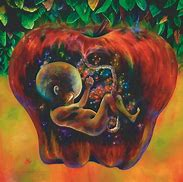
Artist Credit: Of Knowledge Painting by Kd Neeley

Mary and Elizabeth are cousins and are pregnant at the same time. Elizabeth is an older, more mature woman married to Zechariah, a priest. Elizabeth was barren, and she and her husband longed for a child, yet they knew time was running out. 

Why were children so important in Biblical Times?

At that time, children were a sign of God’s favor. Since Zechariah was a priest, it is easy to imagine people talking behind their backs about them being childless. How could a priest not have children? They must have been the talk of the town. Until…

Gabriel.

The Angel who pays a visit to Zechariah.

Elizabeth & Son, John the Baptist

Gabriel not only tells Zechariah that Elizabeth will bear a child, but his name will be John, and that the baby would grow to be a man who would prepare the way for the Lord. 

Just like Sarah laughed in disbelief when God told her she would have a baby in her old age, Zechariah doubted this message from God. Because Zechariah doubted, he could not talk until the baby was born. God silenced him.

Little did Zechariah know at the time that John would be the voice calling in the wilderness.

“Repent, for the kingdom of heaven has come near.”

Matthew 3:2

The Voice of God

Have you ever heard a voice calling in the wilderness? Or God speak to you directly? Or witness a profound moment in which it felt God intervened on your behalf?

Once, I was in my car heading west on Route 1 from Hoboken to Maplewood, NJ. There was traffic, and a car stopped abruptly in front of me. There was no time to react. Yet, I felt an unnatural force stop my car from hitting the car in front of me. I remember thanking my guardian angel to this day.

Similarly, once, I was traveling from Hoboken to Stamford, CT. It was in a blizzard. As I was rounding a corner in Tarrytown, several cars spun out and collided. My car spun out, too. But my car landed in a small ditch. Sure, I was rattled. But I was safe. My car was safe. And I was able to drive the rest of the way home. Once again, my guardian angel was watching over me.

God and his army of angels tend to show up when you least expect them. I’d love to hear about your experiences with God.

In the next post, we will continue this theme of The Miracle of Birth. We will further explore the mothers who gave birth to two religious leaders who changed the world.

#Christmas #Birth #Motherhood #Mary #Elizabeth #Faith #Nativity #Emotions #Miracles

A Christmas Miracle – Part 1

Introduction

To faith-based people, Christmas is the celebration of the birth of their savior, Jesus.

Most of us are familiar with the significant elements of the Christmas Story, or as some might say, the Nativity Story. Like baby Jesus, Mary, Joseph, and the manger. Then came the shepherds and the wise men. 

The Bible definitely doesn’t wrap stories up with neat bows. They are often confusing and void of details. Yet, the Bible has withstood through the ages as the most significant piece of literature of all time.

Why?

Because its words pierce the heart and allow the Holy Spirit to speak to each one of us uniquely. And maybe the Bible was written just for you and me!

The Miracle of Motherhood

Before we can appreciate and fully understand the meaning of Jesus’ birth, we need a refresher on noteworthy mothers in the Bible. We begin today’s post with the miracle of motherhood.

In the Bible, several women give birth to baby boys, who become some of the greatest leaders in the Bible. These Old Testament women faced infertility and were initially unable to conceive. Some were even past child-bearing age! Yet, through God’s divine plan, each went on to experience the miracle of birth.

Sarah & Son, Isaac

There is Sarah, the wife of Abraham, who becomes pregnant and gives birth to Isaac (Genesis 21:1).

Rebecca & Twins, Esau & Jacob

Interestingly, next is Rebecca, the wife of Isaac, who gives birth to twins Esau and Jacob (Genesis 25:25-26).

Rachel & Son, Joseph

After Rebecca comes Rachel, Jacob’s wife. Jacob is the man who married Leah by mistake (wearing a veil in the bridal tent) and then has to work seven more years for his Uncle Laban’s approval to marry his true love, Rachel. Rachel becomes the mother of Joseph (Genesis 30:22).

Manoah’s Wife & Son, Samson

Then, there is the unnamed woman who is Manoah’s wife. She conceives and gives birth to Samson.

Hannah & Son, Samuel

Next is Hannah, who cries out to God and finally has Samuel. After weaning, she presents Samuel to Eli, the Priest, who then raises Samuel in the house of God (1 Samuel 1:20). 

Each of these women was deeply spiritual. They each cried out and prayed fervently for a child. Some, for decades. Sarah even laughed when God promised Abraham descendants as numerous as the stars in the sky. She waited more than fourteen years for the prophecy to come to fruition. 

The Miracle of Surrender

These women who become mothers teach us that God controls even the minute details of our lives. Even though the Bible may be devoid of details, there is nothing in this world that God does not know. There is a plan for you and for me.

How do we ensure we are doing what God wants us to do? For me, the first step is surrender.

We need to let go and let God.

When we give ourselves to God, we open ourselves to new possibilities. New doors to open and go through. You will only know what is on the other side of the door if you open it.

Reflecting on a point of surrender in my life, a pivotal moment stands out – back in 2015. Faced with a failed job search in the tri-state area, I turned to prayer. “God, I surrender and will go where you lead.”

The Miracle of a Dream Come True

I expanded my job search nationwide, leading to a surprising job offer in Arkansas. Little did I know what God had in store for me. My dream of teaching academic courses was fulfilled a few short years later. Only God knew of that dream, and it came true!

How do these biblical stories relate to you and your life’s journey? Has there been a time in your life that you surrendered to God? I’d love to hear about it.

As we close, may this Christmas be a time for you to be open to the possibilities of what might lie ahead.

Go ahead and open the door.

#miracles #relationships #mothers #motherhood #christmas

Behind Closed Doors – Artist: Unknown (From Pinterest)

A Thanksgiving Mindset – Part 4

Achieving a Thanksgiving mindset requires gratitude, introspection, and transformation. We must also learn to intentionally pause so we can recharge and refocus. Once we do that, we can reflect and reset.

“It’s never too late to press the reset button on your life.”

Unknown

Recharge

Recharging involves replenishing our inner resources. It encompasses activities that rejuvenate our spirits—whether it’s through solitary introspection, pursuing hobbies, spending time with loved ones, or immersing ourselves in nature’s tranquility. This process isn’t merely about resting; it’s about actively seeking what revitalizes us, ensuring we’re emotionally, mentally, and spiritually equipped for what lies ahead.

Refocus

Refocusing invites us to reassess our goals, recalibrate our energies, and realign our intentions. It’s about acknowledging the distractions that pull us away from our desired path and consciously steering ourselves back on track. Amidst the chaos of daily life, these moments of realignment act as compass points guiding us toward growth and development.

Our lives are so busy that we must consciously take a break from our busyness. Take a deep breath. Let’s think about where we have been and where we are going

Reflection

Reflection serves as the cornerstone of personal growth. It’s the conscious act of looking back at our experiences, discerning the lessons they offer, and applying these insights to propel us forward. By reflecting on life’s twists and turns, we pave the way for continuous improvement. Identifying our personal blessings and the profound impact our interactions may have on others can serve as a catapult to more empathy, understanding, and a deeper appreciation for the interconnectedness of our lives.

Reset

Artist Credit: Clymenza Hawkins

Thanksgiving can serve as a reset button. It’s about shaking off the old, shedding what no longer fits, and embracing the chance for a fresh start. Picture it as a makeover for your mindset—an opportunity to grow into a newer, better version of yourself.

A reset is that pivotal moment where we let go of what’s holding us back. It’s about taking a hard look at what’s not working and daring to reimagine what could be. It’s that push to let go of old habits, beliefs, or fears that no longer serve us.

Thanksgiving is the perfect time to refocus, recharge, reflect, and reset. As we express gratitude for what we have, we also open ourselves up to the idea of change. It’s like saying thanks for what’s been and getting excited about what’s to come—a chance to start afresh.

HAPPY THANKSGIVING!

A Thanksgiving Mindset – Part 3

A Thanksgiving Mindset – Part 2 focused on a simple message. 

Transformation and Introspection.

Image Credit: @ Bohu _ Allure

To recap, we discussed developing gratitude, improving ourselves through self-assessment tools, learning and understanding healthy relationships, and practicing mindfulness. 

Let’s continue with Transformation.

This morning, a good friend of mine posted this to her Facebook page:

“If you fail, never give up because fail means ‘First Attempt In Learning.’ The end is not the end. In fact, the end means ‘Effort Never Dies.’ If you get no as an answer, no means ‘Next Opportunity.’ Change your mindset!”

Author Unknown

Growth Mindset

For transformation to occur, we have to change our mindset. A growth mindset sees challenges as opportunities for learning and development, much like the cycles of planting, nurturing, and harvesting in nature. It stems from the belief that we can do better. We can improve. We can become better people. Why? Because there is no limit on learning. We can improve ourselves by shifting our thinking and reactions and being proactive. 

Proactive to more intentional awareness.
Thinking before we speak. 
Choosing our words more carefully. 
Learning the art of “pause.” 
Listening more and speaking less.
Observing nonverbal communication in dialogue. 

If we actively practice healthy communication, we will eventually, transform into something different than we were or even currently are. 

Fixed Mindset

Shifting from a growth mindset to a fixed mindset, the fixed mindset perceives the world as black and white. It is, or it isn’t. Growth is stifled, like a dormant seed unwilling to sprout. Those who seem stuck might be fixated on something they can’t get past. It is overwhelming. Whatever the “it” is. One way of becoming “unstuck” is by talking. Talking it out with a trustworthy friend. Or by seeking professional help. We can’t fix a problem that isn’t ours. What we can do is to do something ourselves. Accept the situation and learn from it. What can we do differently next time? What can we learn from it?

 “With a fixed mindset, it can be hard to find motivation to work through perceived weaknesses because the ability to change may seem as hopeless as changing your eye color. In contrast, with a growth mindset, you’ll see your perceived weakness as a challenge that can be motivating — and even fun — to overcome.”

Mia Primeu, Stanford Today, November 10, 2023.

Thanksgiving to Transformation

Thanksgiving is the perfect canvas for cultivating a transformation mindset. Instead of focusing solely on what’s on the table, we can shift our attention to what we are grateful for—the love of family, the support of friends, and the opportunities surrounding us. A transformational mindset encourages us to foster a sense of appreciation for the present moment and provide grace (tons of it, perhaps) to those who surround us. As we sit down to a Thanksgiving feast, we can view the past year’s challenges not as obstacles but as stepping stones for personal and collective growth.

Let’s not think only of ourselves but others.

Pondering the transformation process begins with recognizing past experiences of ourselves and others, understanding reactions to life’s circumstances, and what we can do to make a positive mark on the people who mean the most to us and the world at large.

Sacrifice
Rebirth
Emergence 
Growth
Adaptation
Flight
Legacy

Transforming into people God wants us to be can only be done when we adopt a growth mindset. 

We don’t have to be fixed; we can choose to change

– a canvas yet to be painted.

A Thanksgiving Mindset – Part 2

Last weekend, I dragged my husband to the Arts and Crafts Festival to a section of Tampa called Temple Terrace. The closest parking was about a half mile from the event. When we walked through a parking area into the park, a regal-looking historic building sat majestically on a bed of lush green grass.

Artist Credit: Chrysalis by Patricia Allingham Carlson
fine america dot com

Built in 1914 as a horse stable, The Woodmont Clubhouse is the oldest structure in Temple Terrace. It served as a schoolhouse and is now the home of the Woman’s Club and a venue for special events.

As I squinted at the building, I marveled at its timeless beauty and rich history. I found myself lost in thoughts of transformation. The transformation of a horse stable to a schoolhouse. And, then, to a venue for special occasions.

I thought of resilience and evolution. This brought me back to the theme of transformation. Which, of course, means personal growth for me. I pondered how we could convert this sense of transformation into a Thanksgiving mindset?

Timeless beauty.
Architectural grandeur.
Serene and tranquil.
A treasure trove of memories.
Harmonious and picturesque.

It is simple:
Transformation and Introspection.

You can’t have one without the other.

Let’s begin with Introspection.

“It isn’t enough to talk about peace. One must believe in it. And it isn’t enough to believe in it. One must work at it. It’s not enough to dream of it. It’s not even enough to pray for it.
You must work at it.”

Eleanor Roosevelt

Introspection requires:

  • Developing a Gratitude Attitude
  • Improving Self through Assessment Tools
  • Understanding Healthy Dynamics of Relationships
  • Practicing Mindfulness
  • Respecting Cultural and Spiritual Interpretations

Introspection demands a heart of gratitude to understand the emotions and attachments we have with things. Embracing ourselves as unique sons and daughters of the Almighty Designer of the Universe initiates this journey.

You must work at it!

Self-improvement involves learning lessons, identifying areas for growth, and recognizing strengths through self-assessment tools.

You must work at it!

Strengthening our relationships with others involves observing and learning from them.

You must work at it!

By examining our origins, family system, and individual experiences, we can better recognize triggers so we can redirect ourselves in a healthier way. Digging deep into childhood and unpacking past trauma takes work! It is not for the faint of heart.

You must work at it!

Mindfulness, a multifaceted practice, involves grounding ourselves in the present, examining the past through a magnifying glass with a different lens, creating space to dream, and setting goals for personal growth.

You must work at it!

By fostering a Thanksgiving mindset of introspection, we can truly celebrate beyond material abundance to a godly abundance within ourselves and share joy with those we cherish.

We’ll explore Transformation next time.

A Thanksgiving Mindset – Part 1

Artist Credit: Gratitude by
Victoria Campbell

The other day, I was in a Marshalls’ store and Christmas music was piping through the speakers. I caught myself humming to the music, and then I stopped. Dead in my tracks. And out loud, I quietly muttered, “It’s not even Thanksgiving yet!”

As I strolled the aisles, I noticed the festive and glittery Christmas section. There were huge bins filled with holiday merchandise on wheels waiting to find a home on the store floor. I pondered how we could convert this sense of abundance into a Thanksgiving mindset?

It is simple:
Thanks and Giving.

Let’s begin with gratitude.

“Gratitude makes sense of our past, brings peace for today, and creates a vision for tomorrow.”

Melody Beattie

Let’s be thankful for who we are.

Where we are. 

How we are. 

And why we are. 

Redirect.

Instead of conforming to the materialism of the holiday, we can redirect our focus to enriching our own lives and the lives of others. Which can be done by doing instead of buying.

By focusing less on the shopping gods who want us to spend our money on frivolous gifts, we can spend more time being grateful for what we have right now.

Who are the people in your life who genuinely want you in theirs? Who extends a warm welcome? Who reaches out for help or to simply say, “Hi?” Thanksgiving is the perfect time to center our thoughts on gratitude for the people and experiences that shape our lives. 

When we embrace a mindset of thankfulness, we will naturally want to give back to others. We want to help those in need. Those less fortunate.

What can we do to help others?

We can purchase one small item when we go shopping and place it in a box to give away during the holidays.

Or, we can visit an elderly person in a nursing home who may want some company. 

A video call to catch up with someone who impacted our lives and whom we have lost touch with might also be an excellent expression of gratitude.

By fostering a Thanksgiving mindset of both thankfulness and giving, we can truly celebrate the season in a way that extends beyond material abundance to a godly abundance of doing good for others.

But what if you don’t feel thankful? 

I think most of us would agree that stress and anxiety are part of the holidays, no matter what stage of life you are in. Even as a youngster, I remember feeling anxious about what Santa would leave under the tree. Would it really be what I wanted? Or, something else?

So, I get it. It sure is difficult to focus on gratitude when life sometimes, just simply sucks.

I get that – all too well.

If the holidays are overwhelming, please reach out to a trusted friend, or a professional to help you navigate this time of year.

Mild Moses Takes the Lead! – Lessons Learned from the Wandering Israelites

Reading how God uses weather to serve purposes for the greater good is fascinating. Today, we will look at the Israelites wandering in the desert.

A Pillar of Cloud.

By day the Lord went ahead of them in a pillar of cloud to guide them on their way and by night in a pillar of fire to give them light, so that they could travel by day or night.

Exodus 13:21

God’s Navigational System.

After the 10 plagues in Egypt, the Israelites began their 40-year trek in the wilderness. At first, they were afraid. They didn’t know where to go. They cried out to God. God sent a cloud by day and fire by night to lead them. Of course, they thought it would take less than forty years. They probably thought it would take only a few months. Can you imagine traveling as a “people” with thousands of mothers, fathers, sisters, and brothers?

The Building of a Leader.

At first, Moses did not think he was capable of leading anyone. He told God that he was slow in speech and tongue. (Exodus 4:10) God wanted to use Moses because of Moses’ humility and willingness to follow God’s direction. God rarely uses the eloquent, strong person to accomplish his mission. He chooses the most unlikely people who turn around and become strong, vibrant leaders.

A Resilient People.

Image Credit: Dorling Kindersley Print
fine art storehouse dot com

Moses spent years honing his leadership skills in managing this great exodus. He learned patience, delegation, and conflict management. His vision and direction created a resilient people. After Moses passed away, God called Joshua to bring the Israelites to Caanan.

Lessons Learned

#1. Strength Comes from Unity and Community.
#2. Wisdom and Inspiration can be found in Family Connections.
#3. Obstacles Prepare Us for Our Life Journey.

Together is Better

In a world where we may feel alone, we can find others who identify with us and can help us overcome challenges. We can achieve goals by leaning on each other for encouragement and support. Can you think of a time when you were discouraged and wanted to quit, yet a friend or loved one encouraged you to continue? What was the outcome?

Gene Pool

Do you have a hankering for salt air? Or you like the cold when it nips your nose. The geographical location of your family of origin might shed some light on some of these quirky feelings you have had all your life.

Family stories provide us with a rich history of what our ancestor’s life journeys may have been like. These stories teach us values. And values can be strengthened by a greater sense of identity and connection to your heritage. Were your family members born during a time of conflict? A time of peace? Did they travel to another place? Was there a failed business? A successful business? Did any of your family members possess a specific talent or skill?

Twists and Turns.

Life is full of unexpected twists and turns. Many of which require hard work. Completing a high school education, college degree, or a trade certification. Or saving for a down payment on a home. What lessons can we learn from the path that leads to our “promised land?”

Maybe the next time you think something is taking “forever” – think again! Let us remember the story of Moses and the wandering Israelites. How steadfast a people continue to flourish despite all odds.

Track down your family tree.

Explore birthplaces.

Be thankful for family.

Take a Deep Breath.

Let’s breathe in wisdom and inspiration and exhale disbelief and pride.

If you liked this topic, please like, because it does matter.
A follow and a comment is great for analytics too!
(This is my “call to action” I’m supposed to include in every post and often forget.)

Faith and Fortitude – Lessons Learned from the Story of the Showdown Between Baal and God.

Image Credit: Unknown Source found in the public domain

Wood. Stones.

Elijah went before the people and said, “How long will you waver between two opinions? If the Lord is God, follow him; but if Baal is God, follow him. Lord, the God of Abraham, Isaac and Israel, let it be known today that you are God in Israel and that I am your servant and have done all these things at your command. …Answer me, Lord, answer me, so these people will know that you, Lord, are God, and that you are turning their hearts back again.” Then the fire of the Lord fell and burned up the sacrifice, the wood, the stones and the soil, and also licked up the water in the trench.

1 Kings 18:21, 36-38

We continue our series of different types of atmospheric conditions used in The Bible. Today’s story focuses on fire which can be influenced by weather elements like wind, temperature, and humidity. In this story, drought, or the absence of rain plays a key role.

Elijah versus Baal.

Elijah was a prophet in ancient Israel during the reign of King Ahab. Baal was a false god to whom the Israelites were worshipping. In this biblical account, God used drought and fire to punish the idolatrous Israelites to prove supremacy over Baal.

Let The Contest Begin!

Elijah, a devout follower of God, foretold a severe drought due to their idolatry. During the drought, God commanded Elijah to demonstrate His supremacy over Baal by challenging the prophets of Baal to a contest on Mount Carmel. Both groups built altars and placed sacrifices upon them. Despite the prophets of Baal calling upon their god to send fire, nothing happened. 

In contrast, when Elijah prayed to God, fire descended from heaven and consumed his offering, showcasing God’s power and reinforcing His position as the one true God.

Lessons Learned

#1. Unshakable Faith Leads to Mighty Acts
#2. Listen to What Your Gut Says
#3. There is Power in Prayer

Unwavering Faith.

There is no doubt about it. Elijah had unwavering faith that God would win the battle with Baal. Faith gives us the courage to face life’s daily challenges. Believing that God will guide me through life brings me comfort. How about you?

Courage.

Elijah’s bravery in standing alone against the crowd is inspiring. Going against popular opinions is typically dicey, for sure. Yet maybe it is time we stop going with the flow and stand up to what truly inspires us – like doing good in the world. 

Persistent Prayer.

In this story, Elijah’s persistence in prayer highlights the importance of staying connected with God through prayer. God wants to commune with us through daily prayer. Do you?

Perfect Timing

Reflecting on the story, God’s plan unfolds in His perfect timing. Learning to be patient is hard work. God does answer prayer by saying yes, no, or wait. Even if God’s timing differs from ours, it’s vital to trust God. His divine plan will be more than whatever you could imagine.

Take a deep breath.

Let’s breathe in the power of prayer and exhale impatience.

If you liked this post, please like, follow, and comment.

Fish Guts? No Thanks! – Lessons Learned from the Story of Jonah

Great Wind. Violent Storm.

Then the Lord sent a great wind on the sea, and such a violent storm arose that the ship threatened to break up. All the sailors were afraid, and each cried out to his own god. And they threw the cargo into the sea to lighten the ship.

Jonah 1:4,5

Returning to the series on weather in the bible, we come to the Story of Jonah. In this Old Testament book, God uses a storm to convince Jonah to stop running away from what he needed to do.

Wicked Nineveh.

Let’s not get ahead of ourselves too much. In this story, God calls Jonah to go to Nineveh. Nineveh was a wicked town. Jonah didn’t think he was up to the task, so he jumped onto a ship traveling in the opposite direction. He thought he could outrun and outsmart God.

Threat. Confession.

Artist Credit: Amir Simon Rom On Etsy dot com

Then there was this storm that came out of the blue. It was so severe it threatened the safety of the ships’ crew, and they drew lots to see who was responsible. It pointed to Jonah, who was then forced to confess his disobedience to God.

3 Days & 3 Nights

A great fish, perhaps a whale, swallowed Jonah after the crew threw him overboard into the violent sea. Jonah had plenty of time to think about God while he was in the belly of the fish. Three days and three nights. Jonah finally prayed to God, and the fish spit him out.

Lessons Learned

#1. The Importance of Second Chances.
#2. Sometimes, We Need to Run Away in Order to See Things Differently
#3. You Can’t Outsmart God.

The story of Jonah teaches us some important lessons about obedience, forgiveness, and second chances. It reminds us that it’s essential to listen to God and do what He asks of us, even if it’s difficult or uncomfortable. It also shows us that God is merciful and forgiving, always ready to give us another chance when we mess up. And finally, it reminds us that no matter how far we may have strayed from the right path, it’s never too late to turn back to God and seek His forgiveness.

The next we hear God’s calling, and we don’t want to do what’s right, remember the Story of Jonah.

Follow God’s instructions even if we think we are not up to the task.
Be patient and compassionate as God was with Jonah.
Trust God to guide us back to where we need to be.

These lessons encourage us to reflect on our lives and consider our relationship with God.

Are you good?

Take a deep breath in. Exhale slowly.

Let’s inhale willingness to follow God and exhale our selfishness.

If you liked this post, please like, follow, and comment.

DO NOT REMOVE TAG UNDER PENALTY OF LAW – Families

Image source: Unknown

Isn’t it interesting that pillows and mattresses come with a tag that states, “Do not remove under penalty of law?” What if each of us were tagged from birth with a “Do not remove under penalty of law?”

The metaphor of the pillow tag represents the bond between family members and the weightiness of breaking it.

Why would some parents remove the tag and others keep the tag on forever? Why would siblings rip the tag off from their brother or sister? Or mother or father? Or child?

Some families abide by the pillow law, while others break it. The difference between them is how they treat each other and how they affect one’s well-being. And this can be intentional or unintentional. And thus, the spider’s web gets more intertwined within itself.

Families who abide by the pillow law are those families who are trying with all their might to keep their family intact.

Healthy families:
Provide emotional support.
Come together in a crisis.
Help solve problems.
Speak to one another after a divorce.
Provide financial support when needed, if able.
Are there for you when you are down.
Intervene on your behalf.
Stick to you like glue.

Bravo to the pillow law families!

But not all families are like that. Some families break the pillow tag law.

Families that are incomplete.

Not whole. Not healthy. Or just not the family you thought you would have.

A family that is dysfunctional. Abusive. Toxic. Narcissistic. Inability to set boundaries. Abandoned. Alienated. Discarded. Like trash.

Divorce. Estrangement. Parent Alienation. Intergenerational Trauma.

A word of caution.

Each family dynamic is unique; not all relationships can or should progress. Distancing yourself from toxic or harmful family members can be helpful at times. It can lead to personal growth, healing, and developing healthier relationships. Prioritizing your well-being and safety is crucial. And seeking professional guidance, such as therapy or counseling, can be transformative. Use all the tools available to make informed decisions about family reconciliation.

It’s vital to understand that not all family relationships are salvageable. In some cases, reconciliation may have negative consequences. If the family members have not sought counseling or had profound introspective work done, mending the fences may not be possible. If the parties experienced abuse, addiction, substance abuse, or felt harmed, it may be futile to pursue reconciliation.

It takes two to tango.
You both have to be willing partners.

You can repair the pillow tag!

It won’t be perfect like before, but you can mend it. And it could be better than new!

What would reconnection look like in your family?

A divorced family on speaking terms?

A reunification from an estrangement?

Healing from parent alienation?

Family therapy to work out intergenerational trauma?

These are possible ways to mend a broken family and restore the pillow tag. And remember to seek reconciliation with boundaries and professional support.

Follow a new path back to an old family that has changed as much as you have.

Explore. Set an adventure. Change. Restore. Reconnect.

To peace.

To joy.

To love.

To wholeness.

To the tag, “Do not remove under penalty of law.”

If you enjoyed this please remember to Share, Like, Follow.
(This is my “call to action” I’m supposed to include in every post and often forget. 
Thanks so much for your support!)