Women’s History Month – Part 20: Concluding Remarks

The Legacy of Obscure Women in the Bible

As we say goodbye to March, we close out Women’s History Month by reflecting on the lessons learned from each of these obscure women in the Bible. We honor their lives by seeking to be a little more like them. May we all leave a legacy that inspires faith, courage, and transformation.

The Woman at the Well

The Samaritan Woman, also known as the Woman at the Well, reminds us that living water is free to all who receive it. This remarkable lady leaves a legacy of truth and transformation. Her story provides hope. Hope that God will meet us in our brokenness and offer us eternal life.

Taitha

Tabitha (Dorcas) reminds us that faith is integral to life. Her livelihood as a seamstress enabled her to clothe and care for those less fortunate. This miracle-healed lady leaves behind a legacy of compassion and revival.

Hannah

Hannah endured anguish on many levels. Yet, she prayed at the Temple and made a promise to God. If given a son, Hannah would dedicate him to the Lord. And she did. Her son left his mark on a whole country and changed the course of history. This prayer warrior of a lady leaves a legacy of faithfulness and integrity.

Lydia

Lydia was The Book of Acts version of Martha Stewart. Her open heart and home became a foundation for the early church, proving that faith and vocation can work hand in hand. This lovely lady’s legacy of hospitality and leadership inspires us all to lead with our hearts and minds.

The Midwives

Shiphrah and Puluh, the courageous midwives, stand as models of resistance against injustice. By defying Pharaoh’s decree, they essentially preserved the future of Israel, teaching us that small acts of bravery can have lasting consequences. Their legacy of courage encourages us all to speak out for those who can’t speak for themselves.

Food for Thought

Each of these women, though often overlooked, shaped history in their own way. Their stories inspire us to live with

purpose,
faith,
and courage,
knowing that God can use even the most obscure people to accomplish His divine plan.

Thanks be to God.
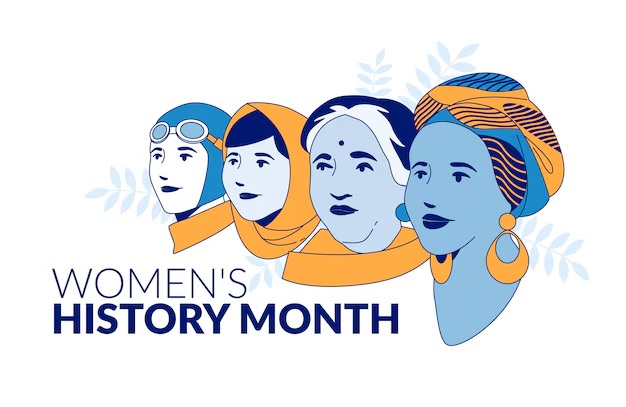
Image Source: freepik dot com

#March #WomensHistoryMonth #WomenintheBible #ObscureWomen #WomeninHistory #Tabitha #Hannah #Lydia #Shiphrah #WomanattheWell #Legacy

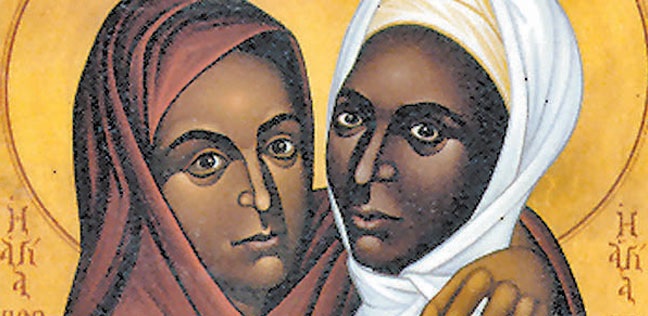
Women’s History Month – Part 19: The Legacy of the Midwives

As we read last time, the Shiphrah and Puah story is a powerful example of standing up for what is right, even in the face of immense danger. The impact of their bravery extended beyond their immediate actions. By letting the Hebrew babies live, these two women sparked hope among their people.

The Legacy of Courage

Families were able to keep their sons, and the strength of the Hebrew community began to flourish. Yet, they were still oppressed. We can imagine the villagers whispering praises of the midwives as heroes.

The midwives stressed the importance of choosing God.

Not the king.

Their faith in God gave them the strength to defy Pharaoh. They trusted that God would protect and guide them. They knew in their hearts that the right course of action was to allow the baby boys to live. In so doing, they encouraged other women to look beyond their immediate circumstances.

Their legacy reminds us that every small act of courage contributes to a larger movement. Whether it be for justice, freedom, or life itself. It makes us think about our challenges and how we can respond to them. Let us stand firm for what is right. And let us respond with integrity and fearlessness.

Image Source: http://www.photos-public-domain dot com

May this story remind us to listen when God tugs on our hearts.

Next time, we will draw a few conclusions on the obscure women in the Bible as we finish up this series as we head into Stress Awareness Month.

#March #WomensHistoryMonth #WomenintheBible #ObscureWomen #WomeninHistory #Tabitha #Hannah #Lydia #Shiphrah #WomanattheWell #Legacy
March – Women’s History Month: Part 18: Shiphrah and Puah

As we conclude our March – Women’s History Month series focusing on women in the Bible, we now turn to Shiphrah and Puah.

The king of Egypt said to the Hebrew midwives, whose names were Shiphrah and Puah, “When you are helping the Hebrew women during childbirth on the delivery stool, if you see that the baby is a boy, kill him; but if it is a girl, let her live.” The midwives, however, feared God and did not do what the king of Egypt had told them to do; they let the boys live.

Exodus 1:15-17

Courageous Women

These courageous women defied Pharaoh’s order to kill Hebrew newborn boys.

Why?

Because they feared God.

Image Source: Catholicnewsherald dot com

The Fear of the Lord

Why is fear so important?

From Open the Bible, Pastor Colin Smith answers this best. He says, “The fear of God arises out of our knowledge of the grace, mercy, love, forgiveness that leads the person who receives it to fear the Lord.”

In other words, to fear God is to love God, and to love God is to fear Him.

Moral Integrity

The courage put into action by the midwives saved many lives. And their moral integrity was beyond reproach. When Pharaoh ordered them to kill all Hebrew male infants, they defied him. The women chose to preserve life instead. Their fear of God and their moral conviction led to the survival of many children. One special child was Moses, who led the Israelites out of Egypt.

Reflective Question

How can we stand up for justice and righteousness?

Next time, we will look at their legacy.

See you then.

#March #WomensHistoryMonth #WomenintheBible #ObscureWomen #WomeninHistory #Tabitha #Hannah #Lydia #Shiphrah #WomanattheWell #Legacy

Women’s History Month – Part 17: Lydia’s Legacy

A Legacy of Hospitality

Lydia’s home was more than just a gathering place.
It was a sanctuary.
A refuge.
A space where believers could grow in faith and find strength in community.

Her hospitality went far beyond the typical bed and breakfast. She created an environment where faith could flourish.

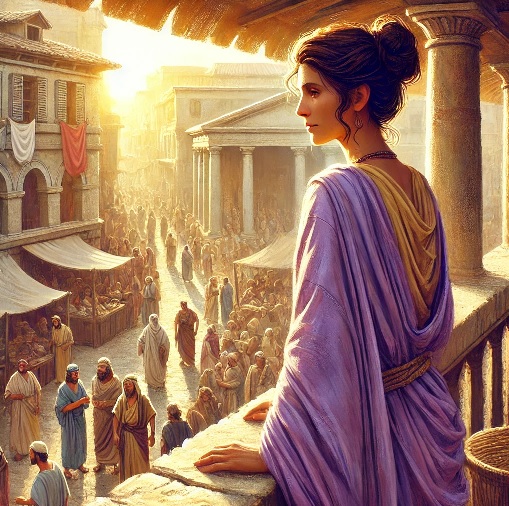
Lydia’s story inspires us to share our faith. We need to share it in the best way we know how. Whether it is through selling purple cloth or opening our homes for fellowship, let us share the good news with those near and far.

Image Source: Generated with ChatGPT

A Legacy of Leadership

A good leader is hard to find. They seem to hide in the strangest places. Yet, we do know that God blesses each of us with certain skills and abilities. The hard part is trying to figure out what they are.

Lydia knew what her skills were and how to use them. She had a knack for welcoming people and making them feel comfortable. She also provided words of wisdom to grow the faith community. Lydia had good business sense. There is no doubt about it.

Like all great leaders, Lydia didn’t lead from a distance. She was deeply involved in her community.

She listened.
She acted.
She believed.
She led.

And she spread the gospel.
Near and far.

While history may not always highlight them, women like Lydia played a critical role in shaping Christianity.

Lydia’s story serves as a reminder that faith is more than a journey. It is a long-lasting legacy.

How are we using our influence? Our resources? Our gifts?

Lydia’s story reminds us to say yes.

Yes, to baptism.
Yes, to hospitality.
Yes, to fellowship.
Yes, to share your faith.

Why?

Because faith is more than a journey. It is a legacy. A lasting one.

Next time, we will look at Shiphrah and find out how this obscure woman in The Bible saved an entire nation.

#March #WomensHistoryMonth #WomenintheBible #ObscureWomen #WomeninHistory #Tabitha #Hannah #Lydia #Shiphrah #WomanattheWell #Legacy

Women’s History Month – Part 16: Lydia’s Loyalty

Last time, we learned that Lydia’s heart was stirred and she became a follower of Jesus.

We continue with her story.

The Anchor of a Home

Lydia’s home in Philippi later became a base of operations for Paul. Her home served as a gathering place for fellow believers. I can imagine how Paul felt as Lydia invited him to her house.

To be fed.
To be encouraged.
Him, and his friends.

…Grateful.

Image Source: thebiblejourney dot org

Her role in the early church highlights her importance in the early days of Christianity. It underscores the influence women had in the early church. Make no mistake, Jesus was surrounded by smart, influential women.

Christianity grew because of these obscure women who significantly contributed to the spreading of the gospel.

Next time, we’ll discover the legacy she left on the world.

Reflective Question

How can we use our influence and resources to support and grow our faith communities?

#March #WomensHistoryMonth #WomenintheBible #ObscureWomen #WomeninHistory #Tabitha #Hannah #Lydia #Shiphrah #WomanattheWell #Legacy

Women’s History Month – Part 15: Lydia

Today, we meet Lydia.

Image Source & for more details on Lydia visit: https://sharonwilharm.com/lydia-in-the-bible/

Lydia hailed from the city of Thyatira, located in modern-day Turkey. However, she was in Phillipi at the time of her introduction in the Book of Acts.

A Businesswoman

Known for her business acumen, Lydia sold purple cloth. Mind you, purple cloth was the fabric of choice for royalty and those who held high positions. So, this lucrative business suggested she had a degree of influence in her community.

Lydia met Paul and his friends in Phillipi. At the same time, Paul spread the gospel through Europe and Asia Minor. After arrival at Philippi, Paul and his entourage went to the riverside. There, women gathered for prayer.  

Lydia was there.

At the river.

With other women.

Praying.

Paul’s Preaching

The Touch of God

As Paul began to speak, Lydia felt a stirring in her heart. Scripture says, “The Lord opened her heart to respond to Paul’s message. (Acts 16: 14)”

Of course, it was God.

Have you ever felt a stirring in your heart?

Right there.

Right then.

She and other members of her household were baptized that very day. And this was when Lydia became one of the first “converts” to Christianity.

Lydia’s home in Philippi later became a base of operations for Paul. Her home served as a gathering place for fellow believers. I can imagine how Paul felt as Lydia invited him to her house.

To be fed.
To be encouraged.
Paul and his friends.

Her role in the early church highlights her importance in the early days of Christianity. It underscores the influence women had in the early church.

Reflective Question:

Lydia’s story reminds us that faith often begins with a stirring in the heart. Have you ever felt a moment when God called you toward something new? How did you respond?

Lydia’s faith didn’t just change her life—it created a ripple effect. She opened her home, resources, and heart to the early church. But what was the lasting impact of her hospitality and leadership?

In the next post, we’ll explore Lydia’s legacy. We will see how her willingness to say “yes” helped shape the future of Christianity.

#March #WomensHistoryMonth #WomenintheBible #ObscureWomen #WomeninHistory #Tabitha #Hannah #Lydia #Shiphrah #WomanattheWell #Legacy
Women’s History Month – Part 14: The Legacy of Hannah

We pick up from last time as we conclude this section on Hannah. We start by reiterating her faithfulness to God.

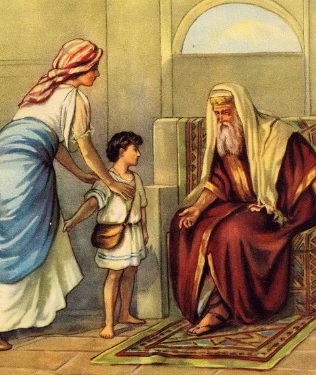
Hannah’s dedication and follow-through on her promise leave an indelible mark on history. How many women do we know who would keep their word and give their child to the Lord? Especially after waiting so long?

Image Source: Answered faith dot com

Legacy of Faithfulness

Hannah’s dedication to God is a powerful testament to her faithfulness and integrity. Despite her deep bond with her long-awaited son, Samuel, she honored her promise to God. She trusted God enough to follow through, giving up the very child she prayed so desperately for. And in return, God blessed her with even more children. Hannah had six children, three more sons and two daughters.

The transformative power of prayer is evident in this story. Hannah’s faith is a lasting example of devotion and trust. Quite impressive! All in the face of adversity by the “other” wife and society.

Legacy of Influence

Hannah played a vital role in shaping one of Israel’s greatest prophets. Her dedicating Samuel to the Lord enabled God to use him in a mighty way. Samuel influenced the nation by anointing kings and guiding God’s chosen people. All tracing back to Hannah’s act of faith.

Like Hannah, prayer inspires us to turn to God in times of need. Her example encourages us to honor our commitments and live out our faith with integrity.

Legacy of Integrity

Hannah’s experience offers hope to us all. All who are struggling with infertility, grief, or any form of suffering. Her story reassures us that God hears our prayers and can bring miraculous changes in our lives.

Hannah’s willingness to give him up for God’s service reflects a strong sense of integrity. It was a selfless and sacrificial type of maternal love. Hannah’s story is multi-faceted as it touches on our human frailties. Yet, it inspires us to practice our faith even when we feel unheard.

Yearning for something or someone.
Full of anguish.
Broken.
And our hearts ache.

In our next post, we continue to discover obscure women in the Bible. Her name is Lydia.

#March #WomensHistoryMonth #WomenintheBible #ObscureWomen #WomeninHistory #Tabitha #Hannah #Lydia #Shiphrah #WomanattheWell #Legacy

Women’s History Month – Part 13: Hannah & Her Faith

Last time, we felt Hannah’s inner turmoil and the sting of unmet expectations. Today, we move from her plea to God to her answered prayer. And the man who played a pivotal role.

Another Twist

In the last post, we read how Eli, the priest, thought Hannah was drunk. Yet, after Hanah debunked that theory.

Are you ready for it?

Eli answered, “Go in peace, and may the God of Israel grant you what you have asked of him.” (1 Samuel 1: 17)

And, so it was.

Right there. Her prayer was answered.

And just as she promised, she presented Samuel to Eli in the Temple after he had been weaned. There, he would live and be raised to serve God.

Image Source: womenoffaithstudy dot com

Hannah’s story doesn’t end there. She goes on to have more children and becomes the mother of a great prophet. Little did she know that her faith would one day shape the course of a nation.

Next time, we’ll explore Hannah’s lasting legacy. How did her unwavering faith continue to bear fruit long after Samuel left her arms?

Reflective Question

How can we cultivate a life of prayer and faith in times of longing and hardship?

#March #WomensHistoryMonth #WomenintheBible #ObscureWomen #WomeninHistory #Tabitha #Hannah #Lydia #Shiphrah #WomanattheWell #Legacy

Women’s History Month – Part 12: Hannah at the Temple

At The Temple

Image Source: Personal Photo from iPhone

We discussed Hannah’s praying, infertility, and social stigma in previous posts.

Today, we will look at two scripture translations of the same sentence to better understand what was going on in Hannah’s mind and heart.

Hannah is at the Temple to set the stage.

She is praying. We pick up the story there.

“As she kept on praying to the Lord, Eli observed her mouth. Hannah was praying in her heart, and her lips were moving but her voice was not heard. Eli thought she was drunk and said to her, “How long are you going to stay drunk? Put away your wine.” – 1 Samuel 1:12-14

She answered Eli in the section below where we look at the Complete Jewish Bible (CJB) and the New International Version (NIV).

The Depth of Pain

Consider these two translations of 1 Samuel 1:16:

At first glance, these differences may seem subtle. Yet, the “worthless” underscores a searing sense of personal devaluation. It is a harsh judgment on Hannah’s very identity. Similarly, “distress and anger” evoke a raw, immediate reaction.

The NIV’s use of “wicked” hints at misinterpretation. And the “anguish and grief” suggests enduring sorrow. Something that lingers.

Either way, both versions capture the turbulent mix of emotions Hannah was experiencing.

Join me next time as we witness the miracle of a blessing from Eli, the Priest.

#March #WomensHistoryMonth #WomenintheBible #ObscureWomen #WomeninHistory #Tabitha #Hannah #Lydia #Shiphrah #WomanattheWell #Legacy

Women in History – Part 10: Hannah & Infertility

Tick Tock

Last time, we introduced Hannah, a woman wanting to be a mother.
But she wasn’t.
Yet, her biological clock kept ticking.
And so it was year after year.

Fervent Prayer

Image Source: istock photo – royalty free

But Hannah prayed year after year, too.
Right there, in the Temple.
Her fiery faith tugged on her heart to pray.
Alone.
Each year, on her annual pilgrimage.

Infertility Through The Ages

Women throughout history have faced infertility and the weight of societal expectations. Just like Hannah.

As was then and still today, motherhood is valued in many cultures. It still leads to personal fulfillment, status, and respect within communities. When a woman can’t conceive, it can trigger all types of stress both physically and emotionally.

In Ancient Egypt, women prayed to Isis, the goddess of fertility. In Greece and Rome, childbearing was an expectation in marriage. Those who didn’t were at risk of being divorced. Or their husbands took another wife. As we will see in Hannah’s story, next time. Even in Medieval Europe, infertility led to stigma and being accused of witchcraft.

Not all that long ago, families relied on children to lend a hand with chores. Whether it be hunting or farming, children meant wealth. The more children in a household, the more hands available to do the tasks at hand. So, if a woman couldn’t have children, people asked why?

What was wrong with her?

The Survival of the Fittest

After all, motherhood is what kept the family lineage going. And that ensured the survival of the village. So, if a woman couldn’t have children, it triggered distress and social stigma. It was viewed as a failure to fulfill a societal role.

And that is plain sad.

Do you see echoes of Hannah’s story in your own life or the lives of others?

Next time, we’ll begin with two passages echoing these struggles. See you soon.

#March #WomensHistoryMonth #WomenintheBible #ObscureWomen #WomeninHistory #Tabitha #Hannah #Lydia #Shiphrah #WomanattheWell #Legacy