Women’s History Month – Part 16: Lydia’s Loyalty

Last time, we learned that Lydia’s heart was stirred and she became a follower of Jesus.

We continue with her story.

The Anchor of a Home

Lydia’s home in Philippi later became a base of operations for Paul. Her home served as a gathering place for fellow believers. I can imagine how Paul felt as Lydia invited him to her house.

To be fed.
To be encouraged.
Him, and his friends.

…Grateful.

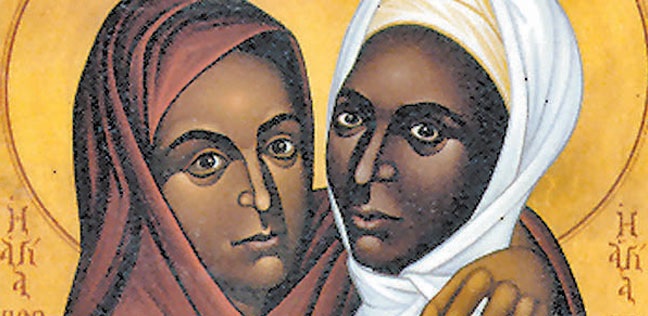
Image Source: thebiblejourney dot org

Her role in the early church highlights her importance in the early days of Christianity. It underscores the influence women had in the early church. Make no mistake, Jesus was surrounded by smart, influential women.

Christianity grew because of these obscure women who significantly contributed to the spreading of the gospel.

Next time, we’ll discover the legacy she left on the world.

Reflective Question

How can we use our influence and resources to support and grow our faith communities?

#March #WomensHistoryMonth #WomenintheBible #ObscureWomen #WomeninHistory #Tabitha #Hannah #Lydia #Shiphrah #WomanattheWell #Legacy
Women’s History Month – Part 15: Lydia

Today, we meet Lydia.

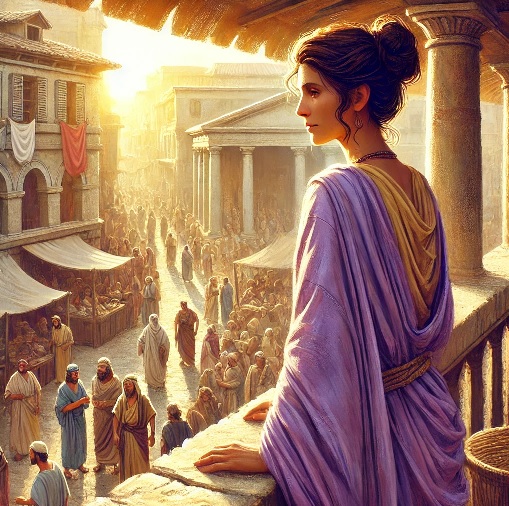
Image Source & for more details on Lydia visit: https://sharonwilharm.com/lydia-in-the-bible/

Lydia hailed from the city of Thyatira, located in modern-day Turkey. However, she was in Phillipi at the time of her introduction in the Book of Acts.

A Businesswoman

Known for her business acumen, Lydia sold purple cloth. Mind you, purple cloth was the fabric of choice for royalty and those who held high positions. So, this lucrative business suggested she had a degree of influence in her community.

Lydia met Paul and his friends in Phillipi. At the same time, Paul spread the gospel through Europe and Asia Minor. After arrival at Philippi, Paul and his entourage went to the riverside. There, women gathered for prayer.  

Lydia was there.

At the river.

With other women.

Praying.

Paul’s Preaching

The Touch of God

As Paul began to speak, Lydia felt a stirring in her heart. Scripture says, “The Lord opened her heart to respond to Paul’s message. (Acts 16: 14)”

Of course, it was God.

Have you ever felt a stirring in your heart?

Right there.

Right then.

She and other members of her household were baptized that very day. And this was when Lydia became one of the first “converts” to Christianity.

Lydia’s home in Philippi later became a base of operations for Paul. Her home served as a gathering place for fellow believers. I can imagine how Paul felt as Lydia invited him to her house.

To be fed.
To be encouraged.
Paul and his friends.

Her role in the early church highlights her importance in the early days of Christianity. It underscores the influence women had in the early church.

Reflective Question:

Lydia’s story reminds us that faith often begins with a stirring in the heart. Have you ever felt a moment when God called you toward something new? How did you respond?

Lydia’s faith didn’t just change her life—it created a ripple effect. She opened her home, resources, and heart to the early church. But what was the lasting impact of her hospitality and leadership?

In the next post, we’ll explore Lydia’s legacy. We will see how her willingness to say “yes” helped shape the future of Christianity.

#March #WomensHistoryMonth #WomenintheBible #ObscureWomen #WomeninHistory #Tabitha #Hannah #Lydia #Shiphrah #WomanattheWell #Legacy

Women’s History Month – Part 14: The Legacy of Hannah

We pick up from last time as we conclude this section on Hannah. We start by reiterating her faithfulness to God.

Hannah’s dedication and follow-through on her promise leave an indelible mark on history. How many women do we know who would keep their word and give their child to the Lord? Especially after waiting so long?

Image Source: Answered faith dot com

Legacy of Faithfulness

Hannah’s dedication to God is a powerful testament to her faithfulness and integrity. Despite her deep bond with her long-awaited son, Samuel, she honored her promise to God. She trusted God enough to follow through, giving up the very child she prayed so desperately for. And in return, God blessed her with even more children. Hannah had six children, three more sons and two daughters.

The transformative power of prayer is evident in this story. Hannah’s faith is a lasting example of devotion and trust. Quite impressive! All in the face of adversity by the “other” wife and society.

Legacy of Influence

Hannah played a vital role in shaping one of Israel’s greatest prophets. Her dedicating Samuel to the Lord enabled God to use him in a mighty way. Samuel influenced the nation by anointing kings and guiding God’s chosen people. All tracing back to Hannah’s act of faith.

Like Hannah, prayer inspires us to turn to God in times of need. Her example encourages us to honor our commitments and live out our faith with integrity.

Legacy of Integrity

Hannah’s experience offers hope to us all. All who are struggling with infertility, grief, or any form of suffering. Her story reassures us that God hears our prayers and can bring miraculous changes in our lives.

Hannah’s willingness to give him up for God’s service reflects a strong sense of integrity. It was a selfless and sacrificial type of maternal love. Hannah’s story is multi-faceted as it touches on our human frailties. Yet, it inspires us to practice our faith even when we feel unheard.

Yearning for something or someone.
Full of anguish.
Broken.
And our hearts ache.

In our next post, we continue to discover obscure women in the Bible. Her name is Lydia.

#March #WomensHistoryMonth #WomenintheBible #ObscureWomen #WomeninHistory #Tabitha #Hannah #Lydia #Shiphrah #WomanattheWell #Legacy

Women’s History Month – Part 13: Hannah & Her Faith

Last time, we felt Hannah’s inner turmoil and the sting of unmet expectations. Today, we move from her plea to God to her answered prayer. And the man who played a pivotal role.

Another Twist

In the last post, we read how Eli, the priest, thought Hannah was drunk. Yet, after Hanah debunked that theory.

Are you ready for it?

Eli answered, “Go in peace, and may the God of Israel grant you what you have asked of him.” (1 Samuel 1: 17)

And, so it was.

Right there. Her prayer was answered.

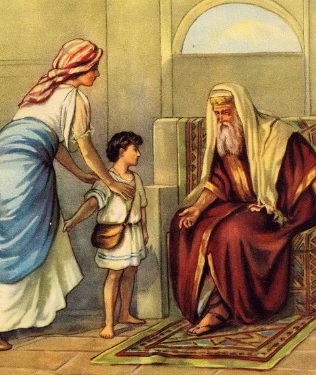
And just as she promised, she presented Samuel to Eli in the Temple after he had been weaned. There, he would live and be raised to serve God.

Image Source: womenoffaithstudy dot com

Hannah’s story doesn’t end there. She goes on to have more children and becomes the mother of a great prophet. Little did she know that her faith would one day shape the course of a nation.

Next time, we’ll explore Hannah’s lasting legacy. How did her unwavering faith continue to bear fruit long after Samuel left her arms?

Reflective Question

How can we cultivate a life of prayer and faith in times of longing and hardship?

#March #WomensHistoryMonth #WomenintheBible #ObscureWomen #WomeninHistory #Tabitha #Hannah #Lydia #Shiphrah #WomanattheWell #Legacy

Women’s History Month – Part 12: Hannah at the Temple

At The Temple

Image Source: Personal Photo from iPhone

We discussed Hannah’s praying, infertility, and social stigma in previous posts.

Today, we will look at two scripture translations of the same sentence to better understand what was going on in Hannah’s mind and heart.

Hannah is at the Temple to set the stage.

She is praying. We pick up the story there.

“As she kept on praying to the Lord, Eli observed her mouth. Hannah was praying in her heart, and her lips were moving but her voice was not heard. Eli thought she was drunk and said to her, “How long are you going to stay drunk? Put away your wine.” – 1 Samuel 1:12-14

She answered Eli in the section below where we look at the Complete Jewish Bible (CJB) and the New International Version (NIV).

The Depth of Pain

Consider these two translations of 1 Samuel 1:16:

At first glance, these differences may seem subtle. Yet, the “worthless” underscores a searing sense of personal devaluation. It is a harsh judgment on Hannah’s very identity. Similarly, “distress and anger” evoke a raw, immediate reaction.

The NIV’s use of “wicked” hints at misinterpretation. And the “anguish and grief” suggests enduring sorrow. Something that lingers.

Either way, both versions capture the turbulent mix of emotions Hannah was experiencing.

Join me next time as we witness the miracle of a blessing from Eli, the Priest.

#March #WomensHistoryMonth #WomenintheBible #ObscureWomen #WomeninHistory #Tabitha #Hannah #Lydia #Shiphrah #WomanattheWell #Legacy
Women’s History Month – Part 11: Hannah & Her Anguish

The Depth of Anguish

Last time, we imagined the longing in Hannah’s heart. Today, we delve deeper into that raw anguish. We will learn what prompted her to seek God.

Was it personal pain, societal rejection, or her home’s complex dynamics?

In this post, we will take a step through the front door of her home.

Love Amid The Struggle

Here is the twist in the story.

Hannah’s husband, Elkanah, had two wives.

Yup. Two wives.

Quite common in those Old Testament times. Peninnah’s was her name, and they had several children together. Peninnah’s fertility constantly reminded Hannah of her barrenness. And the laughter of Peninnah’s children amplified her sorrow. For Hannah, it was a living hell.

At one point in the story, Elkanah gave Hannah a double portion because the “Lord had closed her womb.” (1 Samuel 1:5) This proved that he loved her. As if he sensed her deep anguish.

Image Credit: Shame by Haufi Ficoure / Saatchiart dot com

Can you feel the weight of such anguish?

This background will help us understand Hannah’s anguish more fully as we dig into scripture next time.

See you there.

#March #WomensHistoryMonth #WomenintheBible #ObscureWomen #WomeninHistory #Tabitha #Hannah #Lydia #Shiphrah #WomanattheWell #Legacy

Women in History – Part 10: Hannah & Infertility

Tick Tock

Last time, we introduced Hannah, a woman wanting to be a mother.
But she wasn’t.
Yet, her biological clock kept ticking.
And so it was year after year.

Fervent Prayer

Image Source: istock photo – royalty free

But Hannah prayed year after year, too.
Right there, in the Temple.
Her fiery faith tugged on her heart to pray.
Alone.
Each year, on her annual pilgrimage.

Infertility Through The Ages

Women throughout history have faced infertility and the weight of societal expectations. Just like Hannah.

As was then and still today, motherhood is valued in many cultures. It still leads to personal fulfillment, status, and respect within communities. When a woman can’t conceive, it can trigger all types of stress both physically and emotionally.

In Ancient Egypt, women prayed to Isis, the goddess of fertility. In Greece and Rome, childbearing was an expectation in marriage. Those who didn’t were at risk of being divorced. Or their husbands took another wife. As we will see in Hannah’s story, next time. Even in Medieval Europe, infertility led to stigma and being accused of witchcraft.

Not all that long ago, families relied on children to lend a hand with chores. Whether it be hunting or farming, children meant wealth. The more children in a household, the more hands available to do the tasks at hand. So, if a woman couldn’t have children, people asked why?

What was wrong with her?

The Survival of the Fittest

After all, motherhood is what kept the family lineage going. And that ensured the survival of the village. So, if a woman couldn’t have children, it triggered distress and social stigma. It was viewed as a failure to fulfill a societal role.

And that is plain sad.

Do you see echoes of Hannah’s story in your own life or the lives of others?

Next time, we’ll begin with two passages echoing these struggles. See you soon.

#March #WomensHistoryMonth #WomenintheBible #ObscureWomen #WomeninHistory #Tabitha #Hannah #Lydia #Shiphrah #WomanattheWell #Legacy

Woman’s History Month – Part 9: Hannah

The Story of Hannah

We continue our series on obscure (but great) women in the Bible with Hannah. Her story, found in the Book of Samuel, introduces us to a woman of deep faith and unwavering persistence. Hannah longed for a child and prayed fervently, asking God for a son.

Let’s pause for a moment.

Let’s step into Hannah’s world and feel the depth of her longing.

Image Source: https://www.ladiesdrawingnigh.org/ hannah-bible-verses/

A Yearning

Why?

Because the desire for a child is universal. For many women, the ticking of the biological clock isn’t just a metaphor. It’s a real, visceral longing fueled by hormones and a deep-rooted instinct for motherhood. It’s one of life’s great mysteries.

Now, imagine that yearning stretching on, month after month.

How would you feel?

Disappointed? Defeated? Heartbroken?

The ache of it all.
Waiting.
Hoping.
Praying.

Only to be met with silence. It can be overwhelming. Hannah knew this pain all too well. But she also knew where to take it.To the foot of the cross.

Next time, we’ll dive deeper into her struggle and the faith that carried her through.

See you there.

#March #WomensHistoryMonth #WomenintheBible #ObscureWomen #WomeninHistory #Tabitha #Hannah #Lydia #Shiphrah #WomanattheWell #Legacy

Women’s History Month – Part 8: Tabitha’s Legacy

A Legacy of Compassion and Revival

Tabitha left a legacy of kindness, love, and compassion. She wasn’t known for her wealth or popularity. She was a seamstress. And a talmidah, a devout disciple of Jesus who committed herself to the ministry of others. She lived her faith every day through love and generosity. It is no wonder that her Hebrew name was Tavita, which means beloved. The story of this righteous woman with a big heart is in Acts 9:36-43.

Joppa, a modern-day Jaffa, was one of the oldest port cities on the Mediterranean coast. It was a hub of commerce and trade. A metropolis. In this city, where most would invest in worldly things, Tabita invested in people. Because of her resurrection miracle, many people near and far turned to the Lord.

Why?

Because Tabitha represents us all.
A person who had a choice.
The choice to do good.
Or not.

Tabitha’s story reminds us that acts of service matter. No matter how small, they matter to God. She teaches us that faith is more than belief. Faith is a tangible expression of grace in a world desperate for love.

In this Women’s History Month, let us honor the Tabitha’s of today. The unseen, the faithful, the ones whose love stitches hope. Hope into the fabric of…

Our families,
Our communities,
And our global world.

Next time, we’ll hop back to the Old Testament and take a peek at the Story of Hannah.

Reflective Question

How can we use our talents and resources to serve others in our communities?

#March #WomensHistoryMonth #WomenintheBible #ObscureWomen #WomeninHistory #Tabitha #Hannah #Lydia #Shiphrah #WomanattheWell #Legacy

Women’s History Month – Part 7: Tabitha

Richness in Scripture

As we move forward in our series of obscure (but great) women in the Bible, we will look at different biblical translations for depth and richness. Today, we will dive into the story of Tabitha, a righteous woman who helped the less fortunate.

In Joppa there was a disciple named Tabitha (in Greek her name is Dorcas); she was always doing good and helping the poor.”

Acts 9:36 NIV

Now in Yafo there was a talmidah named Tavita 36 (which means “gazelle”); she was always doing tzedakah and other good deeds.

Acts 9:36 The Complete Jewish Bible

The Tale of Tabitha

Image Source: Pinterest

The story begins in The Book of Acts, written by the Gospel writer, Luke, in 50-80 AD. Jesus’ disciples now find themselves in foreign lands. Places like Antioch, Caesarea, Cyprus, Galatia, Macedonia, and Tyre to name a few. And the gospel of Jesus Christ is spreading like wildfire.

Peter finds himself in Lydda, where he heals Aeneas, a man who has been paralyzed for eight years. News of this miracle spreads quickly.

So, we can imagine the awe and wonder felt by the townspeople.

Meanwhile, in the neighboring city of Joppa, a woman named Tabitha falls gravely ill. Her friends send for Peter. En route, Tabitha dies, and family and friends start the grieving process. As mourners gather at her home, Peter arrives. At once, he ushers the people out of the room. Alone, Peter kneels beside the lifeless body and says a simple prayer,

“Tabitha, arise.”

She does.

Tabitha opens her eyes and sits up. She takes Peter’s hand as he helps her stand. Imagine the stunned silence when Peter opens the door. In the doorway, Tabitha walks out to greet those who came to mourn.

Let’s take a moment to picture the joy and amazement of Tabitha’s friends.

A witness to a miracle.

How often do we witness a miracle and not know it? Can you think of a time?

Next time, we will talk about Tabitha’s legacy.

See you then.

#March #WomensHistoryMonth #WomenintheBible #ObscureWomen #WomeninHistory #Tabitha #Hannah #Lydia #Shiphrah #WomanattheWell #Legacy