Lessons Learned from Princess Diana – Lesson #5

Lesson #5: Be Compassionate

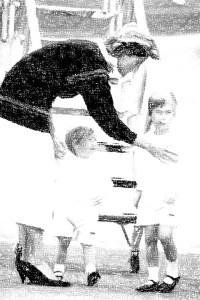
Princess Diana showed compassion in her daily living. She was compassionate toward herself, her family, and the global world. She empathized with those who struggled. Her warm nature bubbled out of her. Princess Diana had a particular type of charisma that was soft and infusive. It slowly dripped and left a trail where ever she went. From her impish grin to her sensitive, loving eyes, she brought authenticity to the monarchy like none other.

Photo Credit: Tim Graham/Getty Images in the Public Domain

One of Princess Diana’s most memorable moments of compassion was when she began her campaign for those suffering from AIDS. She publicly touched people with the disease early on, maybe even before anyone else. She shook hands and hugged the vulnerable. Now, we can look back and say that AIDS wasn’t contractable through touch. But then. No. The disease was new. There was misinformation everywhere. Very similar to when Covid hit in early 2020. There was speculation and a frenzy. Yet, Princess Diana believed that people who had AIDS were still people. Human. And they needed to be loved.

Princess Diana instilled her compassionate nature in her children. She took every opportunity to expose them to the real world. She did not want them to live sheltered lives. Princess Di wanted to teach her children about love. Compassion. Those less fortunate.

Reflecting on my more active mothering years, I, like Princess Diana, tried to instill compassion in my children. I once brought my son to an inner-city church to serve Thanksgiving Dinner to the homeless. I wanted my children to know that there were those less fortunate. I wanted them to appreciate what they had.

As a parent, I tried to infuse love and warmth into our home. It was challenging because I felt the friction of a partner who seemed to undermine every move I made. The more I wanted something, the more my partner fought against it. It was like an oil and vinegar thing. I know now that we were both working through childhood trauma. Whether he would admit that now is anyone’s guess.

Compassion and empathy are traits that can be taught by action. The world will improve if we commit ourselves to be less judgmental, more loving, and speaking kinder words. Princess Diana taught the world about compassion. A lesson undoubtedly worth learning.

Visit http://www.iandthoureflections.com for more lessons learned.

If you liked this topic, please like, share, follow and comment.
Thank you for reading!

New Book Release on Estrangement

Reflections, Poems, & Prayers on ESTRANGEMENT by Nadia Crane has recently been released. This book describes the 8 Stages of Estrangement and more. The author does a great job of simplifying the painful process of estrangement. Ms. Crane offers inspirational reflections, prayers, and poems after the reader becomes intimately personal with the topic. She then goes on to provide a crash course in it with, Estrangement 101.

This book outlines the 8 Stages of Estrangement, as Elizabeth Kubler-Ross describes the grief process related to death in her well-known 5 Stages of Grief. Grief and estrangement overlap in three of the five stages of grief. They are denial, anger, and acceptance. In Ms. Crane’s analysis, her 8 stages add another layer of acceptance, and includes rejection, shame and blame, fear, and healing.

Let’s bring more awareness of this ever-growing epidemic of broken relationships to the masses. If you know a parent who has been shunned, abandoned, blocked or has had no contact with their child, please bring this resource to their attention. If you know someone who is not speaking to their parent for other than abusive, addictive, or other harmful behaviors, please encourage them to reach out to their parent. A parent and child can reconnect with deep compassion, respect, and understanding. Order today and take the first step toward a deeper understanding of this exploding topic.

Wishing families healthy connections!

For more information visit: http://www.iandthoureflections.com

#estrangement #alienation #estrangementepidemic #estrangementbook #estrangementfromparents #estrangementdefinition

I and Thou: A Tribute to Mothers

A Vessel of Love

You are a mother, a giver of life,
and a vessel of love
.

You are a mother, a source of strength,
and a spiritual rock.

You are a mother, a teacher,
and a light on a path.

You are a mother, a woman who inspires, uplifts,
and treasures relationships.

You are a mother, firmly rooted,
imparting wisdom to those who seek it.

You are a mother, an anchor, steadfast,
and unshakable.

You are a mother, who loves unconditionally,
no matter the circumstances.

You are a mother, a compassionate, kind,
and daughter of the Almighty.

You are a mother, a hopeful, inspirational,
and uplifting person.

You are a mother, a mother to many,
and a legacy to follow.

You are a mother, a precious creation,
to be celebrated today and every day.

Image Credit: Mother & Son
Painting Valley dot com

HAPPY MOTHER’S DAY

Career or Calling?

Daily writing prompt
What is your career plan?

I spent most of my professional career as a Career Counselor. I managed a career center for a private engineering school in the Northeast, and then a decade and a half later built a career center for a small liberal arts college in the middle of the United States. In between, I raised two boys and provided consulting services to several small to medium-sized businesses in the healthcare, tourism, communications, and manufacturing industries.

Sure, I can go on and on about career assessment tools, finding and leaning into your strengths, and preparing for a job search. Yet, many of us lose sight of our calling. We have to ask ourselves, what has God called us to do? Praying will help. Taking career assessments will help. Identifying your top five strengths will help. Pray again. Ask God to show you a path. Don’t worry if you don’t hear anything. It will be revealed in God’s timing.

While consulting, I had the opportunity to serve on the Advisory Board of a Marketing Center of an academic institution. The experience pulled strings in my heart to want to return to academia. So, I started applying for jobs in the nearby area. I wasn’t getting any bites. I prayed. I said to God – “I surrender my career to you. I will go where you lead.” I then expanded the job search to the entire country and received a job offer in Arkansas. There, I had the opportunity to teach at the college level, a dream I had that only God knew.

I hope you will allow God to fulfill your dreams!

Lessons Learned from Princess Diana – Lesson #4

Lesson #4: Advocate for Children

Source Image: Pinterest and in the Public Domain

Princess Diana was a dedicated advocate for children. Whether at a children’s hospital, on a field of land mines, or on a walkabout, her passion was seen on her face in many photographs where she often placed a child on her lap. Princess Diana believed every child deserved a safe and happy childhood after her not-so-happy childhood, experiencing her parent’s divorce at seven. The abandonment she felt led her to deeply empathize with children who experienced trauma. Whether it was trauma from homelessness, Aids, or landmines.

As a mother, Princess Diana was hands-on. Since she knew first-hand what divorce does to a child (her), she went to great lengths to make her children feel loved and safe through her divorce from Prince Charles. She effortlessly tried to expose William and Harry to “normal” kids’ stuff, such as public schools, and wearing “commoner” clothes like jeans and t-shirts. How did the Princess do that? Spending quality time with them doing fun things such as going to amusement parks, taking vacations, and enjoying a “Happy Meal” together. It was reported on Elle.com, “She also encouraged her children to express their emotions and be open about their feelings.”

Reflecting on my advocating for children, I leaned into another direction toward education. Most of my career has been teaching or coaching students at all levels. I empathized with the underdog. The child who didn’t have a parent read books to them. Or the teenager who didn’t know how to apply to college. Or the college student who was discerning their calling in life.

As far as my mothering skills, like Princess Diana, I, too, wanted my children to have a “normal” life filled with love, security, and hope for the future. I spent endless hours planning birthday parties, shopping for the perfect selections to place into goodie bags and rejuvenating my creativity of appropriate party activities based on the party theme. That was how I loved my kids. I wonder what they remember or whether or not they cared if a lady was singing with a guitar, the bouncy house was big enough, or digging and finding dinosaur fossils in the sandbox.

The cliche of “I did the best I could” does not fit here. It seems old. Ragged. Better questions would be:

“Did I really do my best?”

“Did I do the parties for my kids?”

“Or did I do them for myself?”

“Was I subconsciously filling an unmet need?”

These are good questions to ponder this Mother’s Day.

Happy Mother’s Day!

Written with the assistance of New Bing AI

If you liked this writing, please Share, Like, Follow.
Thanks for taking the time to read this post!

Lessons Learned from Princess Diana – Lesson #3

Lesson #3: Lead by Example

Image Credit: Public Domain / Source Unknown

Princess Diana believed that actions speak louder than words and led by example in her interactions with her children. She taught them kindness, compassion, and empathy through her own actions. How did the Princess do that? By bringing them along with her as she performed her royal duties. So, in 1993, Prince William, then 9 months, accompanied his parents on their trip to Australia and New Zealand. This action set a precedent; since then, Prince William and Prince Harry have had their own children on business trips. Quite a bit different from the mothering of Queen Elizabeth.

In the recent Forbes article, by Maura Thomas, What Does Work-Life Balance Even Mean? “To some, work-life balance means the convenience of managing a personal life during the workday without the hassle of getting permission or explaining our activities to others. Another common definition of work-life balance is equal time or priority to personal and professional activities.'” Whichever way you look at the work-life balance issue, Princess Diana was a true trailblazer in this regard. Years later, the monarchy was finally endorsing the concept of work-life balance.

Reflecting on my mothering skills and leading by example, I think of the early days of my professional career and as a young mother. I worked in academia, and my job required me to be there for extra hours to entertain recruiters searching for new hires. Early on, I brought my son to work occasionally. I also worked at home one or two days per week. My direct report understood the importance of work-life balance. And I was grateful for his flexibility at a time when remote working was rare. In life, we have to balance work and our family, especially in jobs where time is demanded.

My other lead-by-example was in spirituality, thanks to my dad. Growing up, my dad was a big proponent of “going to church.” Sundays were the week’s highlight for us as a family, although my dad would sing in the choir, and I would sit in church with my mother. I think for my dad, it was the fact that his family went to church together. We arrived together, and we left together. I also think he was trying to be obedient to God. Train your child up in the Lord.

I saw it much more as a spiritual thing for me and my kids. Not so much as an obedience to God thing. It was vital for me to expose my children to faith. A religion where God created the universe. God is love. And God can bring comfort to you when you need it. My lead by example was my unwavering faith. Faith in God. Faith in marriage. Faith in myself. Faith in my children.

Lessons Learned from Princess Diana – Lesson #2

Lesson #2: Prioritize Spending Time with Your Children

Image Credit: Cassidy and Leigh/Shutterstock
Public Domain

Princess Diana understood the importance of spending quality time with her children and was there for them whenever they needed her. She often took them on trips and vacations to create lasting memories. Princess Diana wanted to provide experiences to her children that reflected “normal” childhood activities. She took her children to McDonald’s and ordered Happy Meals. She rode on amusement rides at Disney with them. Princess Di placed her children’s well-being above hers. Most mothers would understand and share this desire.

Like Princess Di, I felt strongly about spending quality time with my children. I took my children to Disney. I also had my share of ordering Happy Meals. One of the most memorable adventures was a trip to Colorado. Why? Because the trip was geared to my specific family. We flew into Denver, picked up an RV, and experienced Colorado. We got lost for a few hours in the middle of nowhere and finally met the paleontologist in Delta for a private tour and excavation. We took a gondola up a mountain in Ouray and visited Mese Verde to explore the cliff dwellings. These were tangible memories. Memories that we experienced as a family. Together. It wasn’t the latest video game or device. It was spending time around a campfire and toasting marshmallows. Yup. That was me.

Lessons Learned from Princess Diana – Lesson #1

Princess Diana was a beloved figure who captured the hearts of people worldwide. She was known for her grace, compassion, and humanitarian work, and she continues to be remembered and celebrated as an icon of compassion and kindness. Why have I been fascinated with her all of these years? First, we were the same age. Second, we shared being the mother of two sons.

Lesson #1: Embrace Motherhood with All Your Heart

Photo Credit: Getty Image
Public Domain

Princess Diana loved being a mother and devoted herself to her two sons, Prince William and Prince Harry. She believed being a mother was one of the most important roles a woman could have and took her responsibilities seriously.

Like Princess Di, I loved being a mother to two small boys. I took my responsibilities seriously and tried to offer my children what I didn’t have. Opportunity. Opportunity for music lessons. Sports camps. Church camp. Being actively involved. Yup. That was me.

I still love being a mom. It is the highest honor and privilege of my life. My younger son and I share a special bond, and my older son has chosen to keep me out of his life until he chooses not to. So, until then, I will focus my “mothering” skills on helping those who want me in their lives.

April is Stress Awareness Month – Part 10

The 8 Stages of Estrangement
Looking at Both Sides of a Coin

Reconciliation

The eighth stage of estrangement, healing, is essential to the journey toward reconciliation. Below lies the conclusion of April’s Stress Awareness series focusing on the rapidly growing estrangement phenomenon. Estrangement is a painful experience that can profoundly affect both parents and children. Extended family members also experience loss. Loss of the family as it was. It can be a challenging process requiring great strength and courage for all involved. In this blog post, hope for reconciliation will be explored.

From a Parent’s Perspective

As a parent, the healing process can be a daunting task. The feelings of rejection and hurt can be overwhelming, and it can be challenging to find a way forward. It is not easy to come to terms with the fact that your child has distanced themselves from you.

The healing process for parents involves accepting responsibility for their actions and behaviors that may have contributed to the estrangement. It is essential to take the time to reflect on the past and identify areas where improvements can be made. This can include examining communication patterns, recognizing where boundaries were crossed, and acknowledging past hurt.

As a parent, it is crucial to approach reconciliation with an open mind and a willingness to listen. Valuing the child’s feelings and taking their concerns seriously is essential. It is necessary for rebuilding trust and repairing relationships.

It is also essential to seek support during reconciliation. This can involve therapy, counseling, or joining support groups for parents of estranged children. Talking to others who have been through similar experiences can help gain perspective and find strategies for a smoother reconnection process.

From a Child’s Perspective

From the child’s perspective, the healing process can be equally challenging. It is not easy to come to terms with the fact that you have distanced yourself from your parent. It can be tough to navigate the complex emotions of estrangement, such as anger, guilt, and sadness.

Healing involves accepting the past and moving toward forgiveness. This process can be complex, particularly if significant hurt and pain occur. It is essential to recognize that forgiveness does not mean forgetting or excusing past behaviors but rather letting go of anger and resentment.

It is vital to approach these conversations with empathy and understanding, recognizing that the healing process is a two-way street. It is also essential for the child to communicate their needs and boundaries clearly. This can involve setting limits on communication or establishing clear expectations for future interactions.

Seeking support during reconciliation is also crucial for the child. This can involve therapy, counseling, or joining support groups for individuals who have experienced estrangement. Talking to others who have been through similar experiences can help gain perspective and find strategies for more effective reunification.

Conclusion

Image Credit: Freepik dot com

In conclusion, healing is a vital part of the journey toward reconciliation. Reconciliation is not possible without healing. Open wounds, fester. Injuries that have healed leave scars. Therefore, both parties must approach the reconnection with grace, love, and patience. Reunification requires parents and children to accept responsibility, communicate their needs and boundaries, and seek third-party support. Reconciliation is challenging, but with patience, understanding, and empathy, it is possible to rebuild relationships and find a way forward for the child’s and parent’s sake and the family system. Dedication, effort, and mutual understanding can rebuild relationships and create a strong foundation for a loving and healthy family dynamic. Ultimately, the journey toward reconciliation can lead to a brighter future for both parents and children.

#Estrangement #NadiaCraneAuthor #8StagesofEstrangement #Reconciliation

April is Stress Awareness Month – Part 9

The 8 Stages of Estrangement
Looking at Both Sides of a Coin

From a Parent’s Perspective

Stage 8 | Healing

Healing comes in all sizes and shapes, and moving forward with life and becoming unstuck, is essential. Healing can begin with writing, therapy, exercise, or workshops. Breathing retreats can help. Seminars on Living a Miraculous Life can help. Spiritual vacations can help. Here is where hope may enter the picture. This is to be considered cautiously. Not necessarily hope for reconciliation, although that may very well occur. It is hope for what the future might hold. Hope may also be a necessary component for coping. Parents cope in different ways. Whatever helps heal a parent from estrangement is worth doing. It is essential to heal “enough” so that life can move forward. To become “unstuck.” To start living again with purpose and with thinking differently.

I am finally able to speak about the estrangement without breaking down. I am making progress! I am spending time with the people who want me in their lives. I’m concentrating on my extended family. I have a lot of love to give, and I am so grateful I can share my love with those who see the value in me.

A parent’s perspective

This is the phase where a parent will practice self-control and where self-empowerment begins to flourish. Parents may start their day with a meaningful mantra, prayer, or other mindful practice. It is a time to try new hobbies, activities and new circles of friends. Expanding horizons and being open to conversations will start to occur. No matter how healing occurs, there is nothing more important than for a parent to be their best authentic self. 

It is the author’s opinion that complete healing of oneself is not possible. Hearts will begin to mend when forgiveness occurs because it is part of the healing process.

Forgiveness of parents.
Forgiveness of personal trauma.
Forgiveness of children’s behavior.
Forgiveness of the who’s, what’s, and why’s of the estrangement.

Complete healing is impossible. So, what is next? Healing as best as possible so one can appreciate the simple joys of life.

Photo Credit: Freepik dot com / healing

From a Child’s Perspective

Stage 8 | Healing

This is the stage where the child accepts estrangement as part of life. The child begins to heal when they find others who have similar situations. They find a tribe that supports estrangement.

I have finally accepted that my parents are no longer my parents. As far as I am concerned, I have no parents. My friends’ parents are much more respectful, accepting, tolerant, and kind. They do not have high expectations nor drone on and on about the past. My friends’ parents are drama free, and I like that.

A child’s perspective

The beginning of this stage is very vulnerable for children. They are at a tittering juncture, wondering if they made the right choice. There is deep reflection, and they question their original thinking. This is when about 20% of estranged children reach out to reconcile with their parents. Those who accept their circumstances or what they are might seek further counseling for their healing journey.

It is the author’s opinion that complete healing of oneself is not possible. Hearts will begin to mend when forgiveness occurs because it is part of the healing process.

Forgiveness of parents.
Forgiveness of parent’s trauma.
Forgiveness of parent’s behavior.
Forgiveness of the who’s, what’s, and why’s of the estrangement.

Complete healing is impossible. So, what is next? Healing as best as possible so one can appreciate the simple joys of life.

Author’s Note: Estrangement caused me to feel unloved, and I knew I needed to love and respect myself before I could love others again. From my experience in participating in support groups with other estranged parents, there is a choice to make. You can choose to blame, distrust, and be bitter. Or, you can choose to love and heal yourself, from this incredibly harrowing experience, by opening up to others. It’s up to you. A special thank you to Kathryn Kollowa, EdD, MSN, RN, for her feedback and added insights incorporated in this most recent update.

If you gained insight into estrangement, please Share, Like, Follow or Comment.
Thank you for your support!

#Estrangement #NadiaCraneAuthor #8StagesofEstrangement #Healing