Ah! June!
It is a lovely month, don’t you think?
And perhaps a magical time for a bride and groom to pledge their love to one another amongst family and friends.
In Part 1, we talked about June, which dates back to the Roman Empire and how Juno, the Roman goddess of marriage and childbirth, inspired its popularity among couples wanting to tie the knot.
In this post, we will dig deeper into the role Juno played in the traditional ancient wedding.
Ancient Wedding Traditions
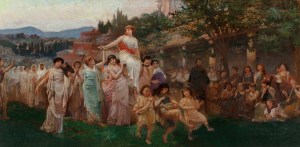
Roman weddings, like those of the affluent of our day, were elaborate ceremonies with religious rituals. They centered around worshipping Juno, the goddess of marriage. The bride and groom did so in order to receive a blessing from Juno for their marriage. This included sacrifices, prayers, and customs thought to cement the couple’s future and to bring happiness and prosperity.
Let’s look at specific examples.
Choosing the Wedding Date
June was the most popular month for Roman weddings. And Juno had a lot to do with that. Even so, brides and grooms could consider other months as well. But they were always based on lunar cycles.
The Confarreatio Ceremony
The most sacred Roman wedding was called the “confarreatio.” A significant part of this ritual involved the couple sharing a spelt cake (panis farreus). The cake symbolized unity and abundance. It was a solemn pledge to Juno and to each other.
Nuptial Rites and Sacrifices
Before the wedding ceremony, the couple offered cakes, wine, and incense to Juno while the Priests recited prayers. These practices further emphasized Juno’s central role in the wedding ceremony. These offerings were believed to purify and bless the union.
The Bridal Procession
After the ceremony, a procession would lead the bride to her new home, where nuts and coins lined the path. These symbolized fertility and prosperity. As the procession made its way through town, they stopped at shrines and offered prayers to Juno. Further confirming Juno’s protection over the marriage.
The Pronuba
Like the modern-day maid or matron of honor, the “pronuba” was a married woman. The pronuba assisted the bride before, during, and after the wedding ceremony. As a representative of Juno’s, she embodied the ideals of marital fidelity and longevity. Her role was to guide the bride through the wedding rituals. It was no wonder that the pronuba ensured tradition was followed.
Legacy of Time
There is no doubt that the goddess Juno played a pivotal role in ancient wedding ceremonies. It underscored the profound cultural significance and importance of marriage in Roman society. Such customs highlighted how entwined Juno was in the institution of marriage.
Part 3 will explore the transformation from Juno’s central role in the wedding ceremony to the sacred vows before the God of Christianity.
#Love #June #Juno #Weddings #Traditions
 I and Thou Reflections